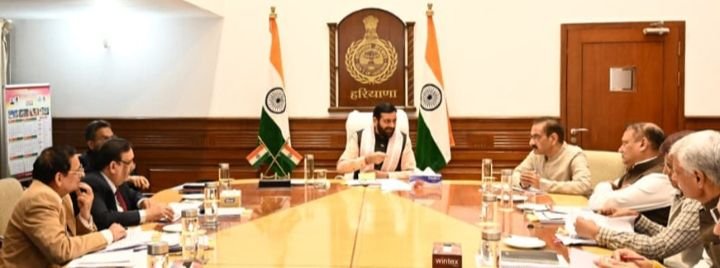
In a major push toward efficiency, transparency, and good governance, Haryana Chief Minister Nayab Singh Saini on Wednesday reaffirmed that the state government will not tolerate any compromise in the quality of infrastructure development. Chairing a high-level meeting of the Haryana Quality Assurance Authority (QAA) in Chandigarh, the Chief Minister directed officials to adopt stricter monitoring, advanced planning systems, and transparent evaluation mechanisms to ensure world-class infrastructure across the state.
Strict Action Against Substandard Work
Emphasizing that quality must remain the cornerstone of all public projects, CM Saini warned that contractors or officials found guilty of negligence, poor workmanship, or use of substandard materials would face stringent action. He reiterated that every project—from roads to bridges to public buildings—must reflect the highest standards of engineering and accountability.
QAA-Empanelled Experts to Prepare DPRs
Strengthening the planning framework, the meeting approved a proposal to engage QAA-empanelled professional consultants for preparing Detailed Project Reports (DPRs) for greenfield roads, bridges, flyovers, ROBs, road upgrades, and building projects. This decision aims to ensure that every project begins with a technically sound blueprint, enabling accurate execution and minimizing errors.
Third-Party Inspection and Monitoring Agencies (TPIMAs) will also be deployed to conduct independent checks at various stages of construction, reinforcing a culture of external accountability.
QR Codes to Bring Complete Transparency to Project Sites
In a major governance initiative, the government will install **QR codes at all project locations**, allowing citizens to access real-time information through a simple scan. These QR codes will provide:
* Project DPR summary
* Bill of quantities
* Technical specifications
* Contractor and engineer-in-charge details
* Consultant information
* Physical and financial progress updates
This transparency-focused step ensures that social audits become quicker and more effective, enabling citizens to monitor the progress of public works in their area.
Improved Monitoring and Drainage Planning
CM Saini also instructed the QAA to tighten supervision over third-party agencies to ensure there are no lapses. He emphasized integrating proper drainage planning—correct levels, alignment, and disposal systems—into every DPR, noting that water mismanagement often leads to long-term structural damage and public inconvenience.
Payments Only After Quality Verification
To prevent financial leakage and ensure value for public money, the Chief Minister directed that **no payment should be released unless the project meets all prescribed quality standards**, especially in complex structures such as high-rise buildings and bridges.
Database for High-Rise Buildings and Bridges
The government will create a dynamic database of all high-rise structures and bridges in Haryana. This will allow phased structural audits and long-term maintenance planning, ensuring public safety and preparedness.
Unified Quality Control Across Departments
In a move to bring consistency in technical audits, staff from the Quality Control Wings of all departments, boards, and corporations will now be integrated with the QAA. This will create a unified quality management system, improving coordination and speeding up decision-making.
With these reforms, Haryana aims to set a new benchmark in infrastructure governance—strengthening transparency, adopting international planning standards, and ensuring that development is durable, efficient, and people-centric.