
The political response to the court decision in the Delhi liquor policy case has gained national significance following strong remarks by former Uttar Pradesh Chief Minister and Samajwadi Party president Akhilesh Yadav. His statements, reacting to the acquittal of former Delhi Chief Minister Arvind Kejriwal and former Deputy Chief Minister Manish Sisodia, have emerged as one of the most impactful political commentaries on the case, resonating far beyond Delhi and shaping discourse across Uttar Pradesh and national politics.
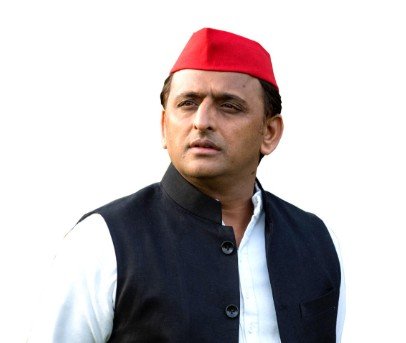
Reacting to the verdict, Akhilesh Yadav described the case as an example of political misuse of institutions, asserting that truth and justice ultimately prevailed. He stated that allegations, however aggressively projected, can never suppress reality, and that no accusation can become so powerful that it overshadows truth. His remarks framed the court’s decision not merely as a legal outcome, but as a moral and political moment in contemporary Indian democracy.
Positioning the verdict within a broader historical and ideological context, Yadav drew parallels between past political propaganda and modern political narratives, suggesting that attempts to discredit leaders through misinformation have existed throughout history. He accused the ruling establishment of using state machinery and institutional power to target political opponents and weaken democratic opposition.
Yadav’s comments carry particular weight due to his political stature in Uttar Pradesh, India’s largest and most politically influential state. As a mass leader with deep grassroots support, his voice significantly shapes public opinion, especially in the Hindi heartland. Political analysts note that when Akhilesh Yadav intervenes in national issues, the impact is not limited to party politics but influences broader opposition unity, electoral narratives, and public discourse.
He further asserted that the verdict stands as a symbolic defeat for what he termed “politics of defamation and intimidation,” and claimed that the decision exposes what he described as a fabricated political narrative. His remarks were also directed at the ruling establishment, accusing it of systematically eroding democratic values by targeting opposition leaders through investigative and enforcement agencies.
In the wider political landscape, Yadav’s response is being viewed as strategically significant. It places him at the forefront of opposition voices defending institutional independence and judicial credibility, while simultaneously reinforcing his role as a key national opposition figure, not just a regional leader.
Observers note that his intervention strengthens the opposition’s broader narrative of alleged institutional misuse and democratic backsliding, a theme that is increasingly central to national political debates. At the same time, it consolidates his influence in Uttar Pradesh politics, where public trust, moral authority, and political credibility remain decisive factors.
As one of the most influential opposition leaders in India, Akhilesh Yadav’s interpretation of the court verdict is now shaping political conversations across party lines. His stance highlights how judicial developments increasingly intersect with national political narratives, and how voices from Uttar Pradesh continue to play a defining role in India’s democratic and political direction.
In the evolving political climate, Yadav’s remarks underline a larger reality of Indian politics today: that major legal decisions are no longer confined to courtrooms, but become catalysts for national political discourse, with leaders like Akhilesh Yadav playing a central role in framing how the public understands and interprets them.


