Saptrishi Soni
The killing of Iran’s Supreme Leader, Ayatollah Ali Khamenei, in a coordinated United States–Israel operation has not only shaken the foundations of Iranian power but also triggered a far more disturbing and complex question: who betrayed him from within?
For any operation of this magnitude to succeed, especially against one of the most heavily protected individuals in the world, precision intelligence is essential. Details about Khamenei’s location, movement patterns, security arrangements, and high-level meeting schedules could not have been obtained through satellites or electronic surveillance alone. Such information could only come from human intelligence — from inside Iran’s own power structure. This is why the most unsettling dimension of this घटना is not just the assassination itself, but the apparent internal breach that made it possible.
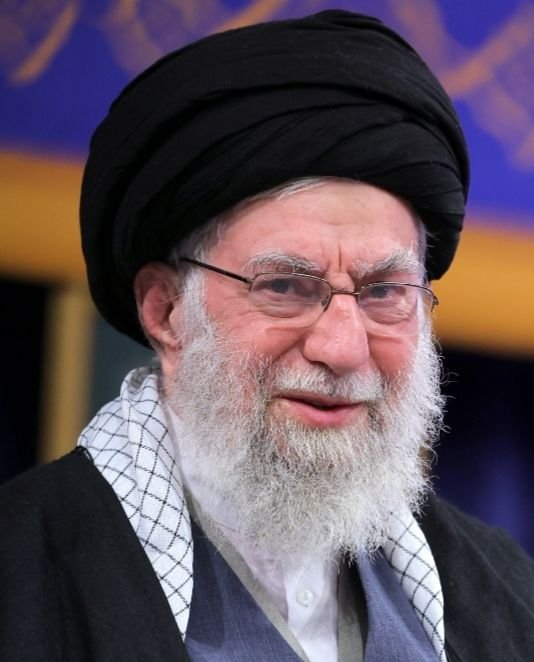
According to reports, the strike targeted a high-level leadership meeting chaired by the Supreme Leader, involving senior military commanders and political figures. The scale of the operation — reportedly involving hundreds of fighter jets and massive aerial bombardment — indicates that this was not a symbolic attack, but a decisive attempt to reshape Iran’s political future. Unlike earlier confrontations, where air strikes avoided direct targeting of the Supreme Leader, this operation carried a clear and unambiguous message: regime change, not deterrence.
This marks a fundamental shift in strategy. Previously, the conflict remained within the boundaries of military posturing and proxy confrontations. Now, the core of Iran’s सत्ता संरचना itself has been directly struck. The narrative has moved from pressure to elimination, from containment to confrontation.
But the deeper crisis for Iran is not just external — it is internal trust. If intelligence truly came from within the system, it suggests a fracture inside Iran’s political, military, or intelligence establishment. That fracture could be ideological, political, or driven by power struggles, but its consequences are enormous. A state that has survived decades of sanctions, isolation, covert operations, and regional pressure is now facing the possibility that its greatest vulnerability lies inside its own institutions.
In the immediate aftermath, Iran faces two parallel challenges: how to respond externally, and how to stabilise internally.
Militarily, Iran’s response options are constrained. While it possesses a large missile and drone arsenal, its long-range strike capabilities, especially those needed for precision targeting over long distances, remain limited. Recent patterns suggest a strategy of controlled escalation — targeting regional capitals and strategic locations in the Gulf to expand the conflict zone without triggering an all-out war. The aim appears to be regional destabilisation rather than direct large-scale confrontation, pulling more actors into the conflict and increasing international pressure on Washington.
Politically, the situation is even more fragile. The Supreme Leader was not just a head of state figure; he was the ideological anchor of the system, the ultimate authority in religious, political, and strategic matters. His death creates a vacuum that cannot be easily filled. Succession in such systems is never smooth, and when combined with external pressure and internal suspicion, the risk of fragmentation increases sharply.
At the same time, the belief that eliminating the Supreme Leader will weaken Iran into submission may prove to be a strategic miscalculation. History shows that survivalist states do not collapse easily under pressure — they often become more rigid, more militarised, and more radicalised. When pushed into a corner, such systems tend to fight for survival rather than surrender. Instead of capitulation, the outcome could be prolonged instability, asymmetric warfare, and a long-term conflict that reshapes the entire region.
The assassination may have removed one man, but it has not removed the ideology, the institutional structure, or the deep-rooted national narrative that defines Iran’s political identity. In fact, it may strengthen internal narratives of victimhood, resistance, and external conspiracy, consolidating hardline forces rather than weakening them.
The central question, therefore, remains unanswered and haunting: who betrayed the Supreme Leader? Was it a faction within the system? A rival power bloc? A compromised official? Or a deeper infiltration that has been unfolding for years?
Because this is not just about one operation. If the intelligence came from within, it means Iran’s internal security architecture has been compromised at its highest level. That changes everything — from how leadership meetings will be conducted to how trust will function within the system.
The killing of Ayatollah Khamenei is not just a geopolitical event; it is a psychological shock, a strategic rupture, and a political earthquake. The real battlefield now is not only in the skies or across borders — it is inside Iran’s own सत्ता संरचना, where suspicion, fear, and power struggles are likely to define the next phase.
What comes next may not be immediate collapse or victory for any side. Instead, the world may be entering a new phase of prolonged instability, silent internal संघर्ष, regional spillover, and unpredictable escalation — a terrain where no actor, including the United States, Israel, or Iran, can be certain of control or triumph.
This is not the end of a conflict. It is the beginning of a far more complex and dangerous chapter.


