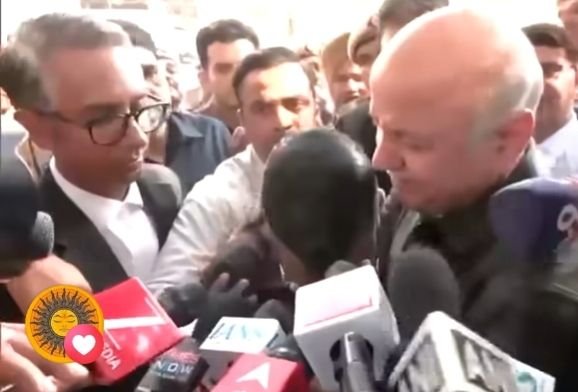
In a major legal and political development, a Delhi court on Friday discharged former Delhi Chief Minister Arvind Kejriwal and former Deputy Chief Minister Manish Sisodia in the high-profile liquor policy case, refusing to take cognisance of the chargesheet filed by the Central Bureau of Investigation. The decision has been widely seen as a significant relief for the Aam Aadmi Party leadership and a major setback for the investigating agency.
Along with Kejriwal and Sisodia, the court also discharged 21 other accused in the case. The CBI had been probing alleged corruption in the formulation and implementation of the now-scrapped excise policy of the erstwhile AAP government in Delhi.
Special Judge Jitendra Singh, while delivering the order, strongly criticised the investigation, pointing out serious procedural and evidentiary lapses. The court observed that there was no cogent evidence on record against Kejriwal and no prima facie case made out against Sisodia. The judge also flagged “misleading averments” in the chargesheet and stated that several allegations were not supported by credible evidence or witness testimony.
The court noted that the voluminous chargesheet suffered from internal contradictions, which fundamentally weakened the prosecution’s conspiracy theory. The judge remarked that the inconsistencies strike “at the very root” of the case narrative constructed by the investigating agency.
In his observations, the judge stated that in the absence of any substantive evidence, the allegations against Kejriwal could not be legally sustained. He further noted that the former chief minister appeared to have been implicated without any concrete material, a situation the court said was inconsistent with the principles of rule of law. Regarding Sisodia, the court recorded that there was no material on record to establish his involvement in the alleged offence, nor was any recovery made from him that could connect him to the case.
A detailed written order is awaited, which is expected to further elaborate on the court’s reasoning and the deficiencies in the investigation.
The verdict carries significant political and legal implications, especially in the context of ongoing political narratives around corruption and governance in Delhi. For the AAP leadership, the court’s ruling is being viewed as a major vindication, while for investigative agencies, it raises serious questions about the quality of investigation, evidence collection, and legal scrutiny in politically sensitive issues.
The decision is likely to have a wider impact on public discourse, electoral politics, and the credibility of investigative processes in high-stakes political cases across India.