
Saptrishi Soni
Aggressive rallies, strategic messaging, and cross-border leadership signal BJP’s renewed push to reshape Punjab’s electoral landscape ahead of 2027
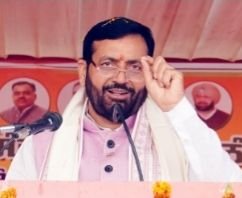
As the political temperature in Punjab gradually begins to rise ahead of the 2027 Assembly elections, an interesting and calculated shift is emerging in the Bharatiya Janata Party’s (BJP) strategy. At the center of this evolving political narrative is Haryana Chief Minister Nayab Singh Saini, who has increasingly taken on the role of BJP’s most visible campaign face in Punjab. His frequent rallies, sharp political messaging, and targeted outreach are not merely routine political exercises—they represent a deeper, long-term strategy aimed at expanding BJP’s footprint in a state where it has historically struggled to establish dominance.
Saini’s Rising Role in BJP’s Punjab Strategy
The BJP’s decision to deploy Nayab Singh Saini extensively in Punjab reflects a conscious attempt to bridge regional political gaps using a leader who carries both administrative experience and cultural proximity. Being a leader from neighboring Haryana, Saini brings a blend of familiarity and assertiveness that the party believes can resonate with sections of Punjab’s electorate.
Over the past few months, Saini has addressed multiple rallies across key districts including Ludhiana, Amritsar, and Patiala. These rallies have not only amplified BJP’s presence but have also injected a new level of political energy into the state’s otherwise bipolar contest between Aam Aadmi Party and Indian National Congress.
Creating Political Noise: Strategy or Substance?
Saini’s campaign style is direct, aggressive, and clearly designed to provoke political debate. His speeches consistently target the ruling Aam Aadmi Party government in Punjab, particularly on issues such as law and order, drug abuse, and fiscal management. At the same time, he does not spare the Indian National Congress, positioning both parties as ineffective alternatives.
This dual attack strategy serves a crucial purpose—it attempts to break the entrenched political binary in Punjab. By projecting both AAP and Congress as failures, BJP is positioning itself as the only viable alternative for governance and stability.
Moreover, Saini’s repeated emphasis on the concept of a “double engine government”—alignment between the state and the Centre under Bharatiya Janata Party—is aimed at appealing to voters seeking faster development and stronger administrative coordination.
Targeting New Voter Segments
One of the most significant aspects of BJP’s Punjab strategy under Saini is its focused outreach to non-traditional voter bases. Historically, BJP has had limited influence in Punjab’s rural and agrarian belt, where regional and caste dynamics have favored other parties.
However, the current campaign is attempting to recalibrate this equation by:
Targeting urban Hindu voters, particularly in cities like Ludhiana, Jalandhar, and Amritsar
Engaging Purvanchal migrant communities, who form a substantial voting bloc in industrial regions
Expanding its appeal among non-Jat Sikh and OBC communities
As an OBC leader himself, Nayab Singh Saini adds symbolic weight to this outreach. His presence signals BJP’s intent to reshape caste equations in Punjab, a state where identity politics has traditionally revolved around different axes.
Cross-Border Leadership: A Calculated Experiment
Saini’s active involvement in Punjab politics also reflects BJP’s willingness to experiment with cross-border leadership models. Unlike conventional approaches where state leaders are confined to their own regions, BJP is leveraging Saini’s proximity to Punjab—both geographically and culturally—to build a narrative of regional integration.
This approach also helps BJP address its leadership vacuum in Punjab. By projecting a strong and accessible leader from a neighboring state, the party is attempting to compensate for its relatively weaker local leadership structure.
However, this strategy is not without risks. Critics argue that relying on an “outsider” could backfire, particularly in a state like Punjab, where regional identity and autonomy have historically played a significant role in electoral politics.
Political Reactions and Resistance
Unsurprisingly, Saini’s aggressive campaign has triggered sharp reactions from rival parties. Leaders from the Aam Aadmi Party have accused BJP of attempting to “import politics” into Punjab, while the Indian National Congress has dismissed Saini’s rallies as mere political theatrics.
Protests, including black flag demonstrations, have accompanied some of his visits, indicating that his presence is not just being noticed—it is also being resisted. Yet, from BJP’s perspective, this resistance may actually serve to amplify its visibility and reinforce its narrative of being a rising challenger.
Electoral Math: Can BJP Convert Noise into Votes?
The critical question remains whether this heightened political activity can translate into electoral gains. Punjab’s political landscape is complex, shaped by agrarian concerns, religious sentiments, and regional loyalties.
For BJP, the challenge lies in converting its growing visibility into a credible vote base. While urban pockets and specific communities may respond positively, the party still faces significant hurdles in penetrating rural strongholds and Sikh-majority constituencies.
Nevertheless, Saini’s campaign is gradually altering the perception that BJP is a marginal player in Punjab. By consistently maintaining a political presence and setting the narrative agenda, the party is positioning itself as a serious contender rather than a peripheral force.
A Long-Term Political Investment
What makes this strategy particularly noteworthy is its long-term orientation. BJP appears to be investing in Punjab not just for immediate electoral gains but for sustained political growth. Saini’s rallies, therefore, should be seen as part of a broader effort to build organizational strength, voter connect, and narrative dominance over time.
In this context, the 2027 elections may not necessarily be about outright victory for BJP, but about establishing a मजबूत foothold that can be expanded in subsequent electoral cycles.
Redrawing Punjab’s Political Map
The increasing frequency and intensity of Nayab Singh Saini’s rallies in Punjab underline a significant shift in BJP’s political calculus. What may appear as “political noise” on the surface is, in reality, a carefully orchestrated strategy to disrupt existing power structures and carve out new electoral space.
Whether this experiment succeeds will depend on BJP’s ability to sustain momentum, build local leadership, and connect with Punjab’s diverse electorate. But one thing is clear—Punjab’s political contest is no longer a two-horse race. With Saini at the forefront, BJP has signaled its intent to be a decisive player in the state’s political future.


