Kalagram turned into a vibrant cultural hub on the second day of the four-day Haryanavi ‘Saang Utsav-26’, as passionate lovers of traditional folk theatre gathered in large numbers despite overcast skies. The festival, an initiative of the North Zone Cultural Centre under the Ministry of Culture, is not just a celebration but a living canvas of Haryana’s rich performing arts heritage, where artisans and performers take centre stage.
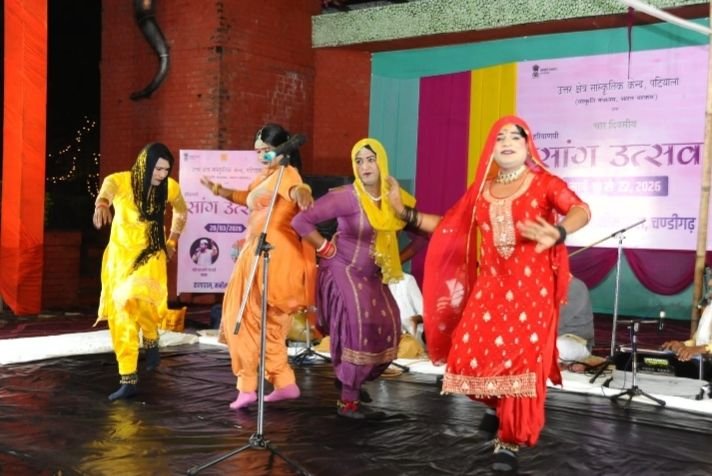
With free public entry, the festival has drawn an enthusiastic audience to Kalagram, reaffirming the enduring appeal of ‘Saang’ — a traditional Haryanvi folk theatre form known for its powerful storytelling, music and dramatic expression.
The evening gained momentum when renowned Saang artist Pardeep Rai Saangi, a torchbearer of a legendary lineage, took to the stage. Representing the fourth generation of the iconic Rai Dhanpat Singh tradition, he delivered a compelling performance that resonated deeply with the audience.
His presentation, ‘Leelo–Chaman’, originally penned by Rai Dhanpat Singh, unfolded a deeply emotional narrative set against the backdrop of pre-partition India. The story revolves around two lovers separated during the turmoil of partition, yet bound by unwavering love. The protagonist’s journey back to Pakistan in search of his beloved, driven by hope and resilience, forms the emotional core of the performance. The eventual reunion of the lovers brought a sense of closure and joy, earning thunderous applause from the spectators.
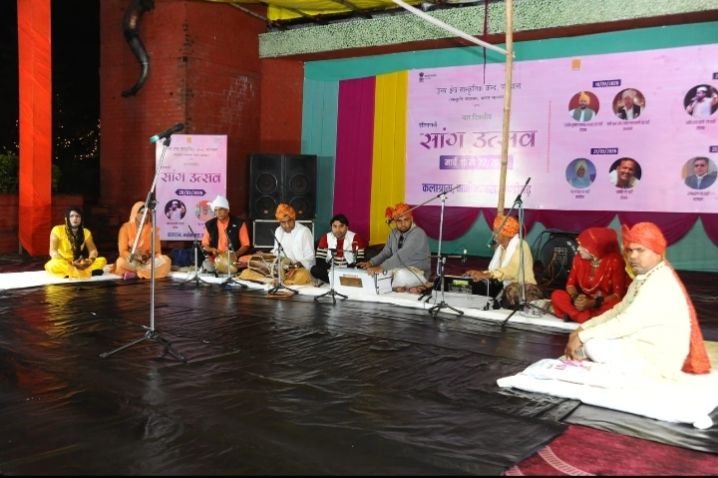
The performance stood out not just for its narrative strength but also for the authenticity brought in by the artistes, who seamlessly blended dialogue, music and expression — hallmarks of the Saang tradition. It highlighted how artisans continue to preserve oral histories and cultural memories through their craft.
Following this, another celebrated Saangi, Daan Singh, along with his troupe, presented ‘Dharmdevi and Nau Bahar’. This narrative offered a layered portrayal of Haryanvi folklore, centering on two young individuals from royal families who were married at an early age, against their will.
The story traced the journey of the young girl, who embodies sacrifice and resilience, raising her husband in the wilderness with the guidance of a sage. As time passes, both characters mature and eventually return to their kingdom, symbolizing endurance, duty and the triumph of perseverance over adversity. The performance also subtly reflected on historical social customs such as child marriage, while emphasizing the guiding role of saints and seers in shaping moral values.
Through such presentations, artisans at the festival are not merely performers but custodians of cultural narratives, breathing life into traditions that risk fading into obscurity.
The festival continues to spotlight leading folk theatre practitioners, with noted artistes Karn Singh and Dharamveer Singh scheduled to perform next, promising more enriching experiences for audiences.
Speaking on the occasion, NZCC Director Mohd Furqan Khan emphasized that such initiatives are crucial for safeguarding and promoting India’s diverse folk traditions. He noted that platforms like Saang Utsav not only celebrate artistic excellence but also ensure that these age-old art forms are passed on to future generations.
Beginning daily from 5 pm onwards, the festival at Kalagram stands as a testament to the enduring spirit of Haryanvi folk culture. More than just a series of performances, Saang Utsav-26 emerges as a meaningful confluence of artisans, audiences and cultural legacy — where stories of the past continue to find relevance in the present.


