
January 19, 1966, stands as one of the most consequential dates in India’s political history. On this day, amid uncertainty, intense internal rivalry, and national anxiety following the sudden death of Prime Minister Lal Bahadur Shastri, Indira Gandhi emerged as India’s first woman Prime Minister. Her election was not merely a change of leadership; it marked the beginning of a new political era that would reshape the Congress party, redefine governance, and leave an indelible imprint on India’s national and global standing.
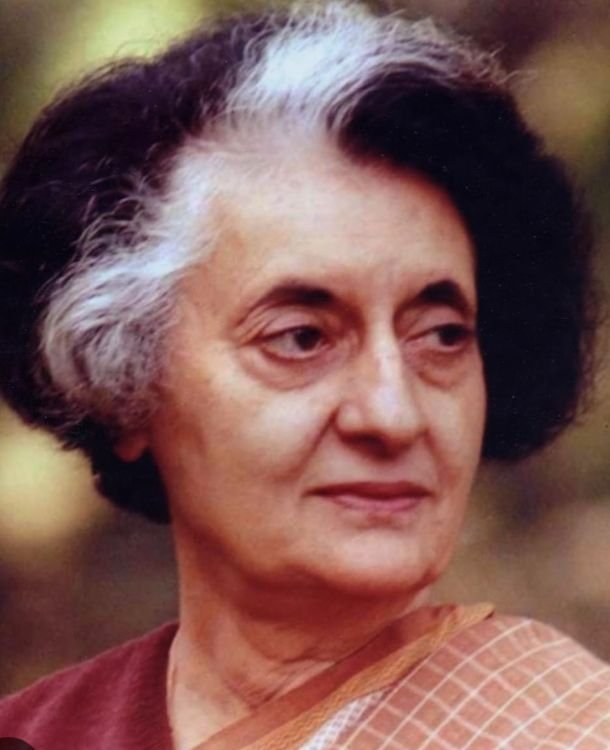
The political atmosphere in early 1966 was tense and fragile. India had lost Shastri unexpectedly in Tashkent, leaving the country without a clear successor. Gulzarilal Nanda stepped in as acting Prime Minister, but it was widely understood that a permanent leadership decision could not be delayed. Within the Congress Parliamentary Party, sharp divisions surfaced almost immediately. The party, long accustomed to consensus-driven leadership since Independence, found itself heading toward its first full-fledged internal contest for prime ministership.
Indira Gandhi, then 48 years old, was not the obvious choice for many senior leaders. Though she was the daughter of Jawaharlal Nehru, she had spent much of her early political life in his shadow, first as a companion during his years in power and later as a party functionary and information and broadcasting minister under Shastri. Many within the Congress saw her as inexperienced, while others underestimated her political instincts, viewing her as a compromise candidate who could be guided, if not controlled.
Her principal challenger was Morarji Desai, a seasoned leader and former finance minister, known for his administrative experience and strong opinions. The contest exposed deep ideological and generational fault lines within the Congress. Party president K. Kamaraj initially attempted to avoid an open election, preferring a consensus candidate to prevent factional damage. However, Desai insisted on a ballot, arguing that democracy within the party required a clear mandate.
On January 19, the Central Hall of Parliament became the stage for an unprecedented political drama. A record turnout of Congress MPs assembled to cast their votes. Desai moved through the hall greeting members, confident of his standing among senior leaders and chief ministers. Indira Gandhi followed shortly after, her presence calm but resolute, greeting colleagues with folded hands. The atmosphere was charged with speculation, rumours, and intense lobbying, reflecting a party at a crossroads.
When the results were finally announced, the hall erupted. Indira Gandhi had won decisively, securing 355 votes against Desai’s 169. The margin surprised many, revealing the extent of support she commanded among ordinary MPs, regional leaders, and those wary of Desai’s rigid style. The vote was more than a personal victory; it signalled a shift in power from the party establishment to a leader who drew strength from the broader parliamentary base.
Indira Gandhi was formally sworn in as Prime Minister on January 24, 1966. From the outset, her leadership was closely scrutinised. Critics within the party believed she would remain dependent on senior figures, especially the powerful group known as the “Syndicate.” Yet, events soon proved otherwise. She demonstrated a quiet but firm resolve to chart her own course, gradually consolidating authority and articulating a vision that resonated with the masses rather than party elites.
The internal tensions within the Congress eventually culminated in a historic split in 1969. Faced with resistance from the old guard over policy decisions and presidential elections, Indira Gandhi chose confrontation over compromise. She broke away to form Congress (I), appealing directly to the people with a platform centred on social justice, economic sovereignty, and strong central leadership. The split was a turning point, transforming Indian politics by weakening traditional power centres and reinforcing the role of popular mandate.
As Prime Minister, Indira Gandhi took decisions that fundamentally altered India’s trajectory. The nationalisation of banks expanded access to credit and strengthened state control over economic resources. The abolition of privy purses ended feudal privileges, reinforcing the principle of equality. Her leadership during the 1971 war, which led to the creation of Bangladesh, elevated India’s stature as a regional power and showcased decisive political and military resolve.
She also pushed India towards strategic autonomy, advancing nuclear and defence capabilities while asserting an independent foreign policy. At the same time, her tenure was marked by intense controversies, including the Emergency, which sparked debates about democracy, authority, and civil liberties. Yet, even her critics acknowledge that her leadership left India stronger, more self-confident, and more assertive on the global stage.
The events of January 19, 1966, therefore, cannot be seen in isolation. That day marked the rise of a leader who would dominate Indian politics for nearly two decades, shaping institutions, policies, and political culture in profound ways. Indira Gandhi’s ascent was not just about breaking a gender barrier; it was about redefining power, challenging entrenched hierarchies, and reshaping the relationship between leadership and the people.
Nearly six decades later, her election as Prime Minister remains a defining moment — a reminder of how a seemingly unlikely choice can alter the course of a nation’s history.


