
Saptrishi Soni।
The Union government’s move to bring Chandigarh under Article 240 through the proposed 31st Constitutional Amendment has triggered one of the most intense political storms Punjab has seen in recent years. What should have been a routine legislative exercise has rapidly transformed into a full-blown confrontation over federal rights, identity, and long-standing historical sensitivities.
Chandigarh is not just a Union Territory on paper—it is an emotion, a legacy, and a symbol of Punjab’s post-Partition reconstruction. Since 1966, when the state was divided and Chandigarh was designated a UT, the city has occupied an exceptional space in Punjab’s collective memory. Administratively, the city has always been governed by the Punjab Governor, and despite the Centre’s direct control, both Punjab and Haryana treated it as a shared capital with Punjab retaining a symbolic edge.
By proposing to alter the administrative structure through Article 240—placing Chandigarh under an independent administrator rather than the Punjab Governor—the Centre has reopened a wound that Punjab believes had been carefully bandaged by decades of convention. The timing is equally crucial, coming shortly after the Centre had to reverse its stance on the Panjab University issue following widespread backlash.
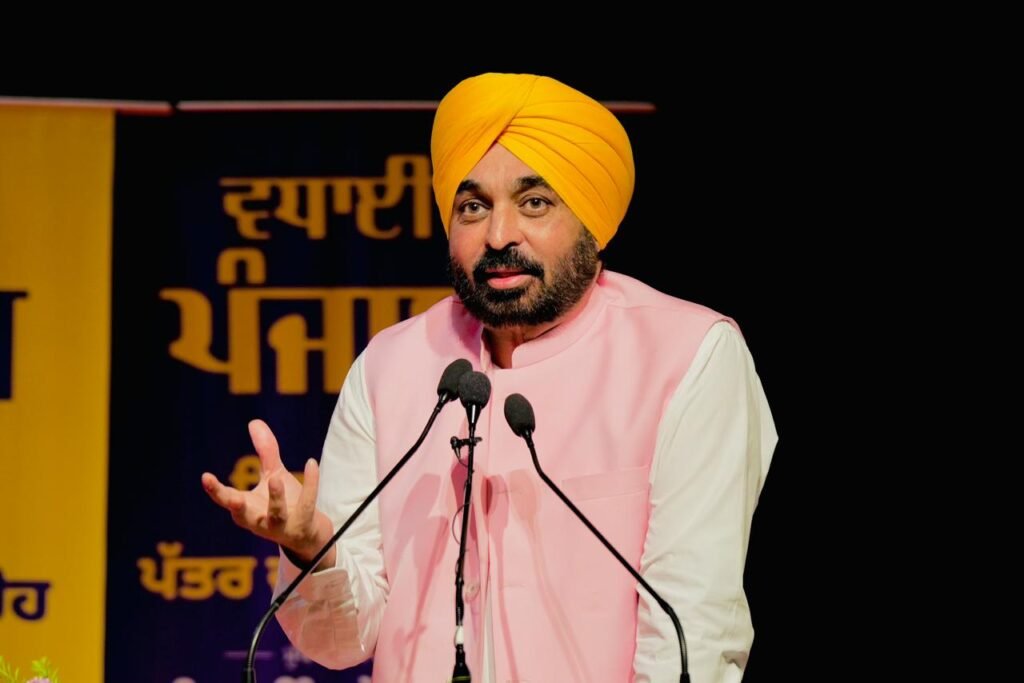
For Punjab’s political parties, this move is not a mere administrative tweak; it is a red flag. It is perceived as an attempt to chip away at Punjab’s rights, alter the delicate balance of Centre-State relations, and weaken the state’s moral claim over Chandigarh. It is no surprise then that non-BJP parties have closed ranks. Chief Minister Bhagwant Mann did not mince words, declaring that Chandigarh *was, is, and will remain* an integral part of Punjab. Congress and Akali Dal leaders echoed similar apprehensions, calling the move a conspiracy to “snatch Chandigarh” through constitutional manoeuvring.
At the heart of the outrage lies a deeper political truth: Punjab believes the Centre is selectively redefining federalism. And Chandigarh—because it is emotionally loaded—is an easy spark for public mobilisation. The political class knows it; the Centre knows it; and the public feels it.
Yet, the debate cannot be viewed solely through Punjab’s lens. Chandigarh—home to lakhs who identify neither as Punjabis nor Haryanvis—has long suffered from an identity vacuum. For decades, the city remained caught between two states without having a legislative voice of its own. Its civic issues often took a backseat to larger political tussles. For many residents, a clearer administrative structure—separate from the constant tug-of-war—could mean greater stability, more efficient governance, and a long-awaited recognition that Chandigarh is more than just a shared capital; it is a living, evolving urban space deserving its own identity.
This is where the challenge lies: two competing truths, each emotionally loaded.
Punjab views Chandigarh through historical rights and cultural memory. Chandigarh’s own residents view it through the lens of governance and civic identity. The Centre, meanwhile, is attempting a constitutional rethink that—whether intentional or not—ignites political fires.
The current controversy also underlines a persistent shortcoming in India’s federal conversations: decisions that carry deep historical and emotional weight are often taken without prior consultation or consensus-building. Chandigarh is too sensitive, too symbolic, and too politically charged to be reshaped without dialogue.
What India needs today is not a constitutional surprise served in the winter session of Parliament. It needs a transparent, inclusive, and historically aware conversation involving Punjab, Haryana, the Centre, and crucially, Chandigarh’s own residents.
Without that, any legal amendment—no matter how technically justified—will be viewed as an act of political intrusion.
This issue is bigger than Chandigarh. It is about trust in federalism, respect for regional identity, and the need to avoid stirring old wounds in a era already filled with political polarization.
If handled carelessly, Article 240 could become yet another flashpoint in the Centre-State dynamic. If handled wisely, it could finally bring structural clarity to a city that has lived in ambiguity for nearly six decades.
The choice, and the consequence, lies with the Centre.
**Hashtags: #ChandigarhDebate #PunjabPolitics #Article240 #Federalism #PoliticalStorm #ChandigarhIdentity #PunjabRights #CentreVsState #IndianPolitics #EditorialView**


