

Saptrishi Soni
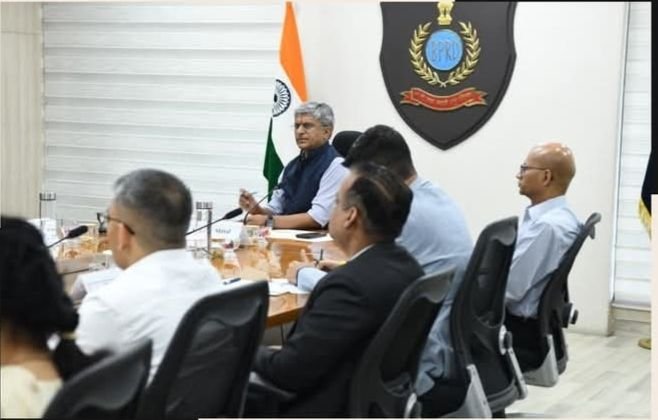
BPR&D’s National Police Mission focuses on future-ready, citizen-oriented policing; BHARATPOL and inter-agency coordination strengthen efforts to trace offenders abroad, while assets worth ₹17,874 crore attached under PMLA
India’s efforts to modernise its policing system and strengthen the fight against transnational crime are gaining momentum, with two complementary initiatives highlighting the changing priorities of law enforcement: the National Police Mission under the Bureau of Police Research and Development (BPR&D), and the growing use of international cooperation and technology to track fugitives operating beyond the country’s borders.
The scale of the latter effort is reflected in figures highlighted by BPR&D in the ninth issue of its publication, Sajag Bharat. According to the Ministry of Home Affairs, 274 fugitive offenders were brought back to India from 36 countries between 2019 and July 2026. During the same period, assets worth ₹17,874 crore belonging to fugitive criminals were attached under the Prevention of Money Laundering Act (PMLA).
The figures underline the increasing importance of coordinated investigations, international legal cooperation, intelligence-sharing and financial tracking in tackling organised crime, economic offences, terrorism, narcotics networks and other serious crimes.
National Police Mission: A long-term roadmap for policing reforms
The National Police Mission was announced by the Prime Minister at the Conference of Directors General and Inspectors General of Police in October 2005. Its objective was to prepare Indian police forces for emerging internal security challenges and transform policing through better organisational capacity, specialised skills, technology and a stronger service-oriented approach.
The mission subsequently came under the BPR&D in 2008, which coordinates its activities and monitors the implementation of projects across States and Union Territories.
The BPR&D, established in 1970 under the Ministry of Home Affairs, serves as a research, development and policy-support institution for India’s police organisations. Its mandate includes identifying emerging policing requirements, conducting studies, supporting police modernisation and improving the quality of training.
The National Police Mission places particular emphasis on developing a force capable of responding to challenges such as cybercrime, economic offences, terrorism, insurgency and organised criminal activity. It also seeks to strengthen policing in metropolitan as well as rural areas.
An important element of the mission is the shift from a traditional force-oriented mindset towards a service-oriented approach. This means making police institutions more accessible, responsive and accountable to citizens, while strengthening community policing and the delivery of public services.
Through research, policy recommendations, guidelines, standard operating procedures and specialised projects, the mission seeks to provide police organisations with a framework for improving their functioning and adapting to changing security requirements.
BHARATPOL strengthens international police cooperation
A major development in India’s efforts to pursue offenders across international borders has been the launch of BHARATPOL by the Central Bureau of Investigation in January 2025.
The platform is designed to improve coordination between the CBI, State Police Headquarters, district police units and other Central and State law enforcement agencies through India’s INTERPOL cooperation framework.
According to the Ministry of Home Affairs, more than 1,400 units of Central and State agencies have been connected through the platform. The system is intended to facilitate the exchange of information, improve coordination in investigations and speed up requests involving international police cooperation.
Earlier, communication between different agencies could involve lengthy procedures and delays. BHARATPOL provides a common digital interface through which information can be shared more efficiently, helping investigators pursue cases that extend beyond national boundaries.
The Ministry has reported that information sought by the CBI from other law enforcement agencies is generally being shared within 10 to 20 days, with some cases receiving responses within three to 10 days.
The platform is particularly relevant in cases involving fugitives who move abroad to avoid investigation or prosecution, as well as organised criminal networks, financial fraud, narcotics trafficking and terrorism-related offences.
274 fugitives brought back from 36 countries
The Ministry of Home Affairs has described the return of 274 fugitives from 36 countries between 2019 and July 2026 as a significant outcome of stronger international cooperation and sustained legal and diplomatic efforts.
The offenders brought back to India were wanted in a range of serious cases, including murder, robbery, sexual offences, organised crime, terrorism, drug trafficking, human trafficking and financial crimes.
The government’s published figures show that the largest categories included 62 persons wanted in murder, robbery and other violent crime cases, 53 in sexual offences and crimes involving children, and 42 linked to organised crime, gang activity and extortion.
The remaining cases included 18 involving human trafficking and kidnapping, 17 relating to terrorism and anti-national activities, 16 involving narcotics offences, 12 connected with smuggling, fake currency and other offences, and nine involving fraud and financial crimes.
The figures indicate that international cooperation is not limited to high-profile economic offenders. It also covers individuals accused of serious conventional crimes who attempt to evade the Indian justice system by taking refuge abroad.
Financial investigations target proceeds of crime
Alongside efforts to bring fugitives back, authorities have focused on identifying and attaching assets believed to be connected with criminal activities.
The Ministry has reported that assets worth ₹17,874 crore belonging to fugitive criminals were attached under the PMLA between 2019 and 2026. Such attachment is an important component of financial investigations, aimed at preventing the disposal or concealment of suspected proceeds of crime.
The distinction between attachment and final confiscation is important: attachment is a legal measure taken during proceedings and does not, by itself, mean that the property has been finally confiscated or that every person associated with it has been convicted.
The Ministry has separately reported restitution amounting to ₹18,762 crore during the same broad period, including funds recovered from economic offenders who had fled the country. Restitution refers to the return of recovered money or assets to the rightful claimants or affected parties, and should not be confused with the amount attached under the PMLA.
Technology and legal reforms reshape the pursuit of fugitives
The expansion of international cooperation has been accompanied by greater use of technology and changes in the legal framework.
The CBI has established a Special Global Operations Centre to coordinate with police agencies in other countries through INTERPOL. Interpol Contact Officers have also been designated in States and Central investigating agencies to improve the flow of information.
The Ministry has highlighted the increasing use of INTERPOL Red Notices as another component of the strategy. A Red Notice is an international request to locate and provisionally arrest a wanted person, pending extradition or similar legal action; it is not itself an international arrest warrant.
The Ministry reported that 401 Red Notices were issued against fugitive criminals over the three years preceding its August 2026 statement. The annual figures rose from 40 in 2022 to 100 in 2023, 107 in 2024, 112 in 2025 and 182 up to July 2026.
Operation Trishul has also been cited as an initiative to trace fugitives using satellite inputs, surveillance, digital footprints and identity mapping, particularly where individuals have allegedly changed their names or identities while staying abroad.
Legal changes have added another dimension. The Bharatiya Nagarik Suraksha Sanhita, which came into effect in 2024, provides for trials in absentia in specified circumstances under Sections 355 and 356. These provisions are intended to prevent the judicial process from being indefinitely obstructed merely because an accused person remains outside the country, subject to the safeguards and procedures prescribed by law.
The larger challenge: Making policing more accountable and effective
The National Police Mission and the international fugitive-tracking framework address different but interconnected dimensions of modern law enforcement.
While the National Police Mission focuses on building institutional capacity, improving professional standards and making police services more citizen-oriented, platforms such as BHARATPOL strengthen the ability of Indian agencies to cooperate with their counterparts abroad.
The wider objective is to create a policing system that can respond effectively to both local public-safety concerns and increasingly complex crimes that cross geographical boundaries.
However, the success of modernisation cannot be measured only through the number of fugitives brought back or the value of assets attached. It must also be reflected in faster investigations, better evidence collection, improved conviction outcomes, stronger protection of citizens’ rights and greater public confidence in police institutions.
For the National Police Mission, the continuing priority will be to ensure that research and policy recommendations translate into practical improvements at police stations and in the everyday experience of citizens. For international cooperation, the challenge will be to sustain coordination, meet the legal requirements of partner countries and ensure that extradition proceedings withstand judicial scrutiny.
Together, these efforts reflect an evolving approach to policing in which professional capacity, technology, financial investigation and international cooperation are increasingly important. The ultimate test, however, will remain the delivery of a police service that is effective against crime, accessible to citizens and accountable under the rule of law.

