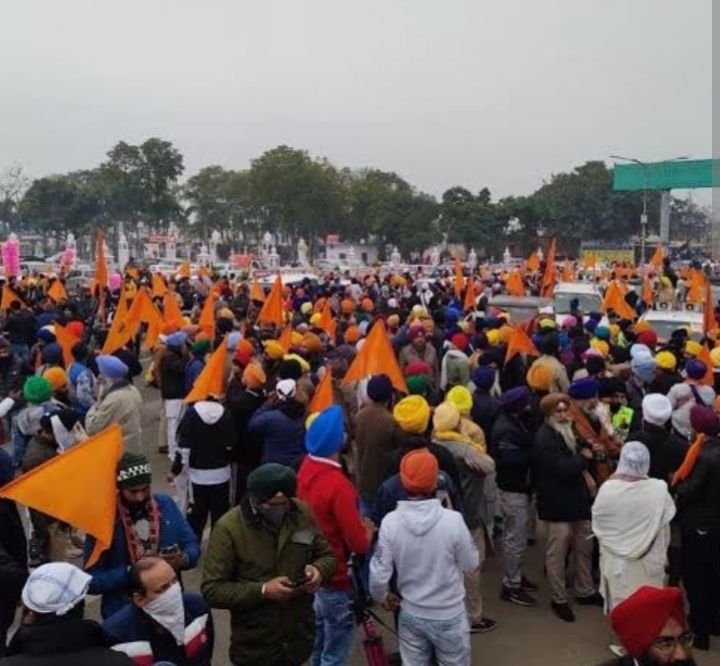
Punjab witnessed a statewide bandh on Friday, August 21, after the Qaumi Insaaf Morcha called for a seven-hour shutdown to press its demand for the release of Sikh prisoners, or “Bandi Singhs”. The bandh began at 7am and was scheduled to continue until 2pm, with security tightened at sensitive locations across the state.
The latest updates from The Tribune indicate that the shutdown began largely peacefully, with no major untoward incident reported during the morning hours. Traffic, however, was thinner than usual in several areas, while the response varied considerably from one district to another.
The Morcha’s principal demand concerns Sikh prisoners whom its supporters say have completed their sentences but remain in jail. The campaign has also focused on the parole of Jagtar Singh Hawara and opposition to police action and criminal cases registered against members and supporters of the movement.
The bandh follows a confrontation between Morcha supporters and Chandigarh Police on August 15. Protesters attempting to move towards the Punjab Governor’s House were stopped at barricades at the Chandigarh-Mohali border. Police used water cannons and tear gas after tensions escalated, while several cases were subsequently registered against protesters and their leaders.
That confrontation became a key trigger for the latest shutdown call. The Morcha has portrayed the police action as excessive and has sought to use the bandh to demonstrate public support for its demands.
The response, however, has not been uniform across Punjab.
In Ludhiana, The Tribune reported a mixed response. Some markets remained closed and bus services were affected, while many educational institutions continued to function. Around 800 buses were expected to stay off the roads in the district following support from bus operators. The Shiromani Akali Dal and Waris Punjab De backed the bandh, while the Congress position remained dependent on a decision by its state leadership.
Mohali witnessed a stronger response, with significantly lighter traffic during the morning rush hours. Several private schools moved classes online, while government schools remained officially open, although attendance was reported to be low.
The state government’s decision to keep government schools open reflects an important distinction in the administration’s response. While the bandh was expected to affect traffic and commercial activity, essential services were not intended to be disrupted. The Tribune had reported before the bandh that government schools would remain open, while private institutions were taking their own decisions regarding attendance and classes.
Security arrangements were strengthened particularly around the Chandigarh-Mohali border, where the Morcha has maintained a protest for a prolonged period. Police and security personnel were deployed at strategic points to prevent protesters from entering Chandigarh and to avoid a repeat of the confrontation witnessed on August 15.
The bandh has also had consequences for public transport and everyday commerce. With sections of the bus operators supporting the shutdown and markets in some areas remaining closed, commuters faced inconvenience. At the same time, the relatively peaceful beginning meant that the widespread violence some had feared had not materialised during the morning hours.
The political response to the bandh is equally significant.
The Sikh prisoner issue has historically carried considerable emotional weight in Punjab and cuts across conventional political divisions. The Shiromani Akali Dal has backed the bandh, while Waris Punjab De has also supported the call. Other political organisations have adopted more cautious positions, illustrating the sensitivity of the issue.
For the ruling Aam Aadmi Party government, the situation presents a delicate law-and-order challenge. The administration must allow peaceful protest while ensuring that highways, public transport, hospitals and other essential services continue to function. At the same time, any fresh confrontation between police and protesters could further intensify political tensions.
For the Morcha, the scale and geographical spread of the bandh will be an important measure of its ability to mobilise public opinion around the Bandi Singhs issue. A strong response would strengthen its argument that the matter continues to resonate widely across Punjab. A limited or uneven shutdown, on the other hand, could indicate that public sentiment is more divided.
The dispute also reflects a broader divide within Sikh politics over how the issue of long-term prisoners should be pursued. Some groups favour sustained public mobilisation, while others have emphasised legal and constitutional processes rather than confrontation.
For ordinary residents, however, the immediate concern has been the effect on daily life. Reduced traffic, closed markets and disruptions to bus services have affected commuters and businesses, although the scale of disruption has varied significantly between cities.
As the bandh moves towards its scheduled conclusion at 2pm, the focus will be on whether the remaining hours pass peacefully and whether any fresh confrontation occurs at sensitive points.
So far, the most notable feature of the August 21 bandh has been its uneven impact rather than a complete shutdown of Punjab. The protest has nevertheless brought the long-standing issue of Sikh prisoners back to the centre of the state’s political and public debate.
The events of the day may also influence how the government, political parties and Sikh organisations approach the issue in the coming weeks. For now, maintaining peace while allowing the expression of protest remains the immediate priority.