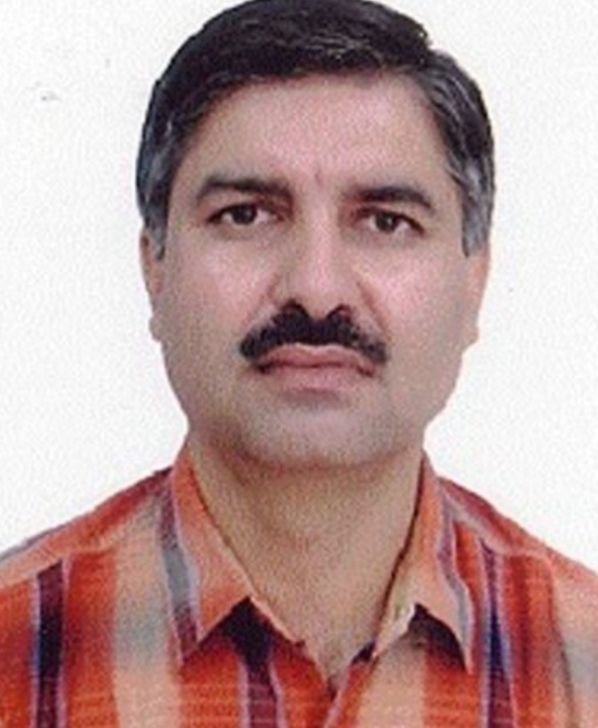
The Central Bureau of Investigation (CBI) has intensified its probe into one of Haryana’s biggest alleged financial frauds after suspended Indian Administrative Service (IAS) officer Pardeep Kumar, a key accused in the multi-crore investment scam linked to the Haryana State Pollution Control Board (HSPCB), was reportedly found missing from his residence when investigators attempted to arrest him.
According to sources associated with the investigation, Kumar’s mobile phone has remained switched off and he could not be located at his official or residential addresses, prompting speculation that he may be evading arrest. While the CBI has not issued any official statement declaring him absconding, investigators are believed to be making sustained efforts to trace his whereabouts.
Pardeep Kumar, a 2011-batch IAS officer of the Haryana cadre, was suspended by the Haryana Government on April 8 while serving as Director, State Transport, and Special Secretary in the Transport Department. Before joining the IAS through promotion from the Haryana Civil Services, he began his administrative career as City Magistrate, Karnal, in 1999.
Investigators believe Kumar’s alleged role relates to investment decisions taken during his tenure as Member Secretary of the Haryana State Pollution Control Board between August 2022 and December 2025. The agency is examining whether mandatory financial procedures were bypassed while investing public funds, causing substantial losses to the government.
The case forms part of the larger alleged IDFC Bank investment scam, estimated at nearly Rs 590 crore, in which government funds belonging to various departments and public institutions are suspected to have been diverted into fixed deposits and investment instruments in violation of prescribed financial norms.
At the centre of the present investigation is an alleged loss of Rs 169.36 crore suffered by the Haryana State Pollution Control Board. The CBI alleges that investments were routed in favour of private banks without following established government guidelines governing the placement of public money.
The investigation gathered momentum after the CBI arrested Saurav Sharma, a data entry operator with the Pollution Control Board, on June 23. A Panchkula court subsequently remanded him to CBI custody for interrogation. Investigators suspect that Sharma allegedly facilitated the processing of financial transactions in conspiracy with certain bank officials and other individuals involved in the investment process.
According to investigators, the suspected fraud was not the result of a single transaction but reflected a systematic pattern in which internal checks, financial approvals and regulatory safeguards may have been deliberately ignored or manipulated. The agency is examining official records, investment files, electronic data and internal communications to establish individual roles and administrative responsibility.
The investigation has also brought another senior bureaucrat under scrutiny. Senior IAS officer Vineet Garg, a 1991-batch officer who served as Chairman of the Haryana State Pollution Control Board during the relevant period, is also being investigated. The Haryana Government has already granted permission under Section 17A of the Prevention of Corruption Act, enabling the CBI to examine decisions taken by the senior officer in his official capacity. Garg is presently serving as Additional Chief Secretary in the Printing and Stationery Department.
Investigators are now widening the scope of the inquiry beyond the Pollution Control Board. Officials familiar with the probe believe the alleged irregularities may not have been confined to a single department, as preliminary findings indicate that similar investment practices could have been adopted by other government bodies that maintained substantial financial deposits. Financial records of multiple departments and autonomous institutions are expected to come under scrutiny to determine whether comparable violations occurred elsewhere.
The alleged scam has raised serious questions about financial governance within government departments. Under established financial rules, public funds are ordinarily required to be invested strictly in accordance with government-approved procedures, ensuring transparency, accountability and the protection of taxpayers’ money. Any deviation from these norms, particularly if carried out in collusion with private entities, could expose officials to charges under corruption and criminal conspiracy laws.
Financial experts say the case highlights broader concerns over internal financial oversight within government institutions. They argue that stronger audit mechanisms, real-time monitoring of public investments and greater accountability among sanctioning authorities are essential to prevent similar episodes in the future.
For the Haryana Government, the investigation represents one of the most significant corruption probes involving the state’s bureaucracy in recent years. With senior civil servants, banking officials and departmental functionaries already under the scanner, the CBI’s inquiry is expected to examine whether the alleged irregularities were isolated administrative lapses or part of a wider network operating across multiple government institutions.
As investigators continue to trace the suspended IAS officer and scrutinise financial records running into hundreds of crores of rupees, the outcome of the investigation could have far-reaching implications for administrative accountability and financial governance in Haryana.