The Haryana government has initiated steps to legally challenge the electricity regulator’s decision to grant a private company a parallel power distribution licence for Gurugram and Nuh, even as a three-day statewide strike by electricity employees has disrupted supplies in several parts of the state.
Chief Minister Nayab Singh Saini and Energy Minister Anil Vij have assured electricity employees that the government will contest the Haryana Electricity Regulatory Commission (HERC) order before the Appellate Tribunal for Electricity (APTEL). The government has also appealed to the protesting workforce to return to duty in the public interest and directed officials to make arrangements to maintain essential services.
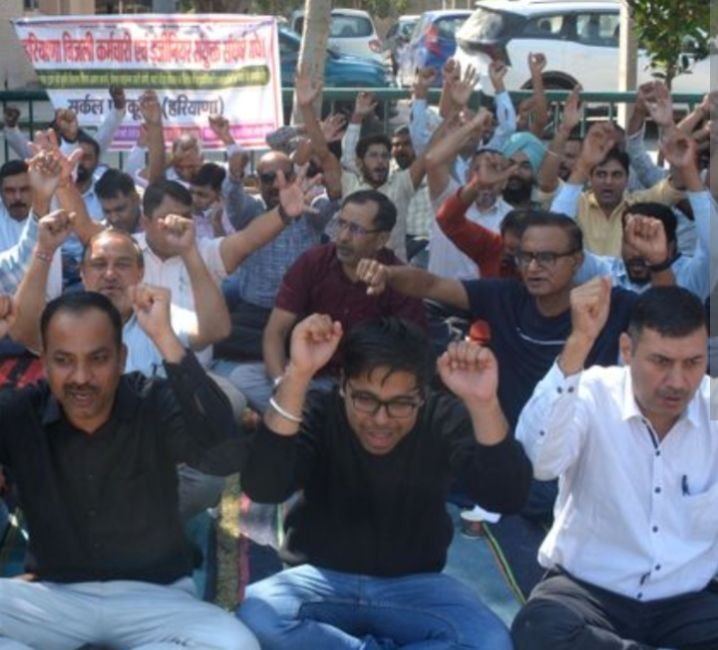
The strike, being observed from October 22 to 24, was called by the Haryana Electricity Employees and Engineers Joint Struggle Front in opposition to HERC’s decision to grant Eleven Power Private Limited a 25-year parallel electricity distribution licence covering Gurugram and Nuh. The employees’ body fears that the move could weaken state-owned power distribution companies and affect the interests of workers and consumers.
Government prepares legal challenge
The state government has made it clear that it does not agree with the regulator’s decision and intends to challenge it through the established legal process.
Energy Minister Anil Vij said the government would file an appeal before APTEL and seek a stay on the implementation of the licence. Although the statutory period for filing an appeal is 45 days, the department has been directed to complete the process within five to six days, according to reports of his statement.
Vij has also said the government is prepared to pursue the matter up to the Supreme Court if required. He clarified that the state government had neither invited private proposals nor initiated the licensing process, which followed an application made directly by the private company under the provisions of the Electricity Act, 2003.
Chief Minister Nayab Singh Saini has similarly assured employees that the government will strongly present its position before the appellate tribunal. He has offered to engage lawyers of the unions’ choice to represent their concerns and urged them to reconsider the strike.
Chief Minister reviews arrangements to maintain essential services
With the strike affecting electricity operations, Saini chaired a review meeting with senior administrative officials to assess preparedness and direct the administration to take steps to minimise disruption.
The government’s immediate priority is to maintain essential electricity services and protect power infrastructure while the legal challenge proceeds. Officials have been instructed to remain prepared to respond to outages and other service-related emergencies.
According to a report in The Tribune, police arrangements were also strengthened ahead of the strike, with 6,230 personnel deployed at 1,015 locations to maintain security.
The government’s approach is to pursue the dispute through legal channels while seeking to prevent the industrial action from further affecting households, businesses and essential public services.
Power disruptions reported across districts
Despite the government’s preparations, the strike has led to reports of electricity disruptions in several areas, including parts of Gurugram and Nuh. Media reports have also described outages affecting residential neighbourhoods and industrial operations, while complaints have emerged from other districts.
The employees’ joint front has claimed that around 40,000 workers joined the strike and that the action affected electricity supply, water services, industrial production and other essential activities. These figures and the assessment of the strike’s wider impact are claims made by the employees’ organisation.
Reports from Sonipat have also referred to the deaths of two young men in an electrocution incident. The circumstances of the incident and any direct connection with the strike would need to be established by the relevant authorities; the reported deaths should not automatically be attributed to the industrial action.
What the HERC order means
HERC granted Eleven Power Private Limited a parallel distribution licence for Gurugram and Nuh, allowing the possibility of consumers choosing between distributors, subject to the regulatory framework and an approved consumer-migration process.
The company has proposed investment in power infrastructure and technology, while employee organisations argue that introducing a private distributor could undermine the state-run distribution network. The dispute therefore involves questions of regulatory authority, the future structure of electricity distribution and the interests of employees and consumers.
The licence was issued by the autonomous regulator, rather than through a direct announcement of privatisation by the state government. Haryana’s decision to challenge the order reflects its stated opposition to the ruling and its intention to seek judicial or appellate relief.
Dialogue and legal action remain the government’s stated course
As the strike continues, the state government faces the twin tasks of maintaining electricity services and resolving the dispute with employees. Saini and Vij have maintained that the government stands with the workforce on the issue and has offered legal support to challenge the regulatory decision.
The next significant steps will be the filing of the appeal before APTEL, any decision on interim relief and the response of the employees’ organisations to the government’s appeal to resume work.
For residents and businesses affected by outages, the immediate concern remains the restoration of reliable electricity. The government’s legal challenge and its efforts to maintain essential services will be central to how the dispute develops over the remaining period of the strike.

