
India Gate protest puts the spotlight back on unanswered questions in the 2022 murder case, with Congress leaders backing the family’s demand that the appointment be held in abeyance until the CBI investigation is completed.
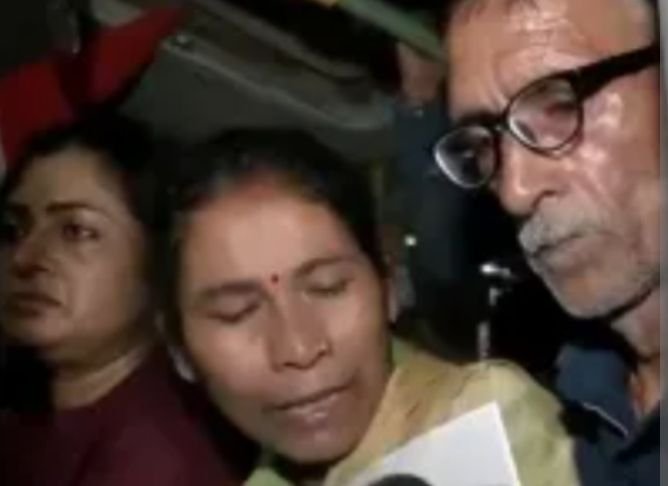
— Nearly four years after the murder of 19-year-old Ankita Bhandari in Uttarakhand, her parents have taken their fight for answers to India Gate, challenging the appointment of senior BJP leader Dushyant Kumar Gautam as the Governor of Sikkim. Their demand is direct: the appointment should be put on hold until the ongoing Central Bureau of Investigation (CBI) probe examines the alleged “VIP” angle and establishes the facts.
The protest has revived a difficult question for the political establishment: when serious allegations are being raised in a high-profile criminal case, should a politically prominent figure be appointed to a constitutional office before the investigation has addressed the questions being raised by the victim’s family?
The question is not whether an allegation itself establishes guilt. It does not. Gautam has denied the allegations linking him to the case and has pursued legal action over claims he considers defamatory. The central demand from Ankita’s parents and the Opposition, however, is that the investigation should be allowed to proceed thoroughly and transparently, without political considerations determining which questions are pursued.
A family’s demand for answers
On October 14, Ankita’s parents, Virendra Singh Bhandari and Soni Devi, began a sit-in near India Gate in New Delhi. They appealed to President Droupadi Murmu to intervene and ensure that Gautam’s appointment was not allowed to move forward while the CBI investigation remained incomplete. Their protest continued into the early hours of October 15, when Delhi Police briefly detained the parents and several Congress leaders before releasing them.
Congress leaders Rahul Gandhi and Priyanka Gandhi Vadra visited the protest site to express solidarity with the family. Other party leaders, including Pawan Khera and Supriya Shrinate, were also among those detained, according to media reports. The episode brought renewed political attention to a case that has remained deeply sensitive in Uttarakhand and beyond.
The family’s objection is rooted in the alleged VIP connection that has continued to shadow the case. Their concern is that the full circumstances surrounding the crime must be established, including whether anyone beyond the three men convicted in the murder had a role in the events leading to Ankita’s death.
Ankita’s mother has warned that the family will not abandon its campaign if its demands are ignored. The message from the protest is that the appointment should not be treated as a routine political decision while the family continues to seek clarity about the alleged VIP angle.
What happened to Ankita Bhandari?
Ankita worked as a receptionist at the Vanantra Resort near Rishikesh in Uttarakhand. She went missing in September 2022, and her body was recovered from the Chilla canal on September 24. The prosecution case centred on allegations that she had been pressured to provide sexual services to a guest and was killed after resisting.
In May 2025, a sessions court in Kotdwar sentenced resort owner Pulkit Arya, the son of former BJP leader Vinod Arya, and two resort employees, Saurabh Bhaskar and Ankit Gupta, to life imprisonment for murder and destruction of evidence.
Those convictions marked a major development in the criminal case. But the family’s continuing concerns about the alleged VIP angle have kept public scrutiny alive. In January 2026, Uttarakhand Chief Minister Pushkar Singh Dhami recommended a CBI investigation following renewed protests and demands for a deeper inquiry. The family has stressed that the investigation must go beyond what has already been established in court and examine the questions it believes remain unanswered.
The controversy over a constitutional appointment
Gautam’s appointment has transformed the family’s demand into a broader political controversy. The Opposition argues that a person facing public allegations connected to a sensitive case should not be elevated to a constitutional position while the investigation is still under way. It has called for the appointment to be held in abeyance until the relevant questions have been investigated.
That argument raises a question of public confidence rather than a substitute for criminal evidence. A governorship is a high constitutional office, and appointments to such positions carry expectations of integrity and public trust. When a case has generated serious concerns and the victim’s family is seeking further investigation, the authorities must be able to explain clearly how those concerns are being addressed.
At the same time, due process requires that allegations not be treated as proof. Gautam has disputed the accusations, and reporting on the legal proceedings indicates that he has challenged claims connecting him to the alleged VIP. No guilt should be inferred from the family’s allegations or the political controversy alone. The appropriate test is whether the investigating agency has examined the available evidence and whether any conclusion is supported by facts and law.
This is precisely why the demand for a credible investigation matters. If the allegations are unsupported, a transparent, evidence-based inquiry should be able to establish that. If credible evidence points to further involvement, the law must be allowed to take its course, regardless of the political standing or official position of anyone concerned.
Opposition demands transparency, not a political shortcut
Rahul Gandhi and Priyanka Gandhi Vadra’s visit has given the family’s protest greater national visibility. Congress has used the episode to question the timing and propriety of Gautam’s appointment, while pressing for the alleged VIP connection to be investigated fairly. The Opposition’s position is that the family should not have to keep returning to the streets to obtain answers about a murder that has already resulted in life sentences for three men.
The government’s position and the existing judicial record must also be considered in any assessment of the case. Uttarakhand authorities have highlighted the arrests, the Special Investigation Team’s work, the filing of the charge sheet and the prosecution that led to convictions. Yet the existence of convictions does not, by itself, answer every separate question the family has raised about the alleged VIP angle. That issue must be assessed on the evidence available to the CBI, rather than settled through political claims or public speculation.
The brief detention of Ankita’s parents has added another troubling dimension to the protest. Their demand is an appeal for accountability from the country’s highest constitutional authorities. While police have responsibility for managing demonstrations and public order, the sight of grieving parents being detained while demanding answers inevitably intensifies public scrutiny of how their concerns are being handled.
The test is whether the investigation can command public confidence
The Ankita Bhandari case should not become merely another contest between the BJP and Congress. At its heart is the death of a young woman, the grief of her family and the public’s expectation that allegations involving influential people will be examined with the same seriousness as allegations involving anyone else.
The immediate question is whether the authorities will consider the family’s request to pause Gautam’s appointment until the CBI completes its investigation. The wider test is whether the investigation can demonstrate that no relevant lead has been ignored and that conclusions are based on evidence rather than political convenience.
A fair investigation does not mean accepting every allegation as true. Nor does it mean dismissing concerns because they involve a politically connected person. It means following the evidence wherever it leads, explaining the findings transparently and allowing the legal process to determine responsibility.
For Ankita’s parents, the appointment has become a symbol of their fear that their questions may remain unanswered. For the authorities, it is an opportunity to demonstrate that constitutional appointments, criminal investigations and the pursuit of justice can be kept separate from partisan calculations.
Until the questions surrounding the alleged VIP angle are addressed through a credible process, the controversy is unlikely to disappear. The family’s demand is for the truth to be established. The responsibility of the state is to ensure that the search for it is neither obstructed by power nor prejudged by politics.

