

Nayab Singh Saini says local bodies raising additional revenue will receive equivalent state assistance; top-performing institutions to be rewarded
Haryana Chief Minister Nayab Singh Saini has announced an additional matching grant equivalent to 2 per cent of the State’s Own Tax Revenue (SOTR) to strengthen the financial position of Panchayati Raj Institutions and urban local bodies, reaffirming the government’s commitment to making grassroots institutions financially independent.
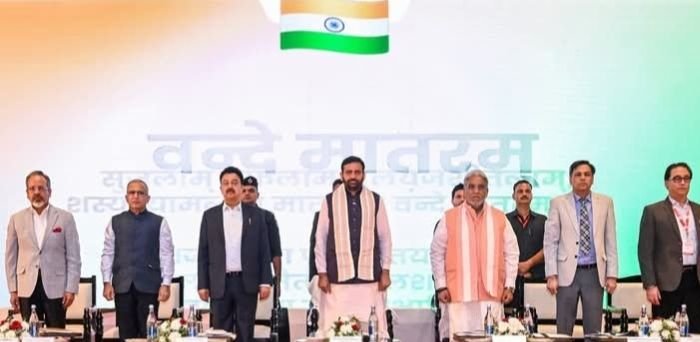
The announcement was made during the concluding session of a two-day national conference on empowering Panchayats and Municipalities in Gurugram. The Chief Minister said financial autonomy was indispensable for effective local governance, as institutions could take independent decisions and respond efficiently to public needs only when they had a stable revenue base.
Saini said the conference extensively examined three major areas of local governance: mobilisation of revenue and financial self-reliance, administrative autonomy with accountability, and improved public service delivery through inclusive participation.
Explaining the state’s initiatives, he said Haryana had established a transparent mechanism for transferring financial resources directly to Panchayats. Their regular revenue streams had also been strengthened through allocations linked to stamp duty collections and electricity consumption. Similarly, a property taxation framework based on capital value had been introduced to improve the financial capacity of urban local bodies.
The Chief Minister emphasised that local institutions must move beyond dependence on government assistance and develop their own sustainable sources of income. He urged Panchayat representatives to utilise common lands, village ponds and community properties more productively so that these assets could generate regular revenue and support development activities.
Municipalities, too, were advised to strengthen their finances through simplified and efficient tax collection mechanisms. Saini observed that government grants could provide immediate financial support, but independently generated revenue was essential for ensuring long-term institutional sustainability and development.
Additional 2% of State Tax Revenue to Be Available as Matching Grant
Elaborating on the financial incentive, Saini announced an additional allocation equivalent to 2 per cent of the State’s Own Tax Revenue as a matching grant for local bodies. Panchayati Raj Institutions and urban local bodies will be eligible to access this additional funding through a competitive process based on the project proposals submitted by them.
The Chief Minister pointed out that the Haryana government currently allocates 7 per cent of its own tax revenue to local bodies. The proposed additional matching grant is intended to encourage these institutions to mobilise more resources independently and invest in development projects.
Under the matching grant mechanism, a local body generating additional revenue through its own efforts will receive an equivalent contribution from the state government. This arrangement is expected to substantially enhance the financial resources available for local development, effectively doubling the additional funds mobilised by participating institutions.
Saini said the initiative would encourage Panchayats and Municipalities to improve revenue collection, identify new income-generating opportunities and adopt better financial management practices. It would also create an incentive for local representatives to take greater responsibility for strengthening their institutions rather than relying entirely on government allocations.
Top Revenue-Generating Local Bodies to Receive State-Level Recognition
In another initiative aimed at promoting financial discipline and healthy competition, the Chief Minister announced special recognition and rewards for local body representatives and institutions achieving the highest revenue generation in their respective areas.
He said the proposed awards would acknowledge effective financial management, encourage innovation in resource mobilisation and motivate other local institutions to follow successful practices.
The government’s broader approach, Saini indicated, was to establish a system in which financial empowerment went hand in hand with transparency, accountability and improved delivery of public services.
The announcements underline Haryana’s effort to strengthen decentralised governance by giving local institutions greater financial independence and encouraging them to become active partners in the state’s development process. By linking additional government assistance with their own revenue-generation efforts, the state aims to create a more sustainable model of grassroots development.

