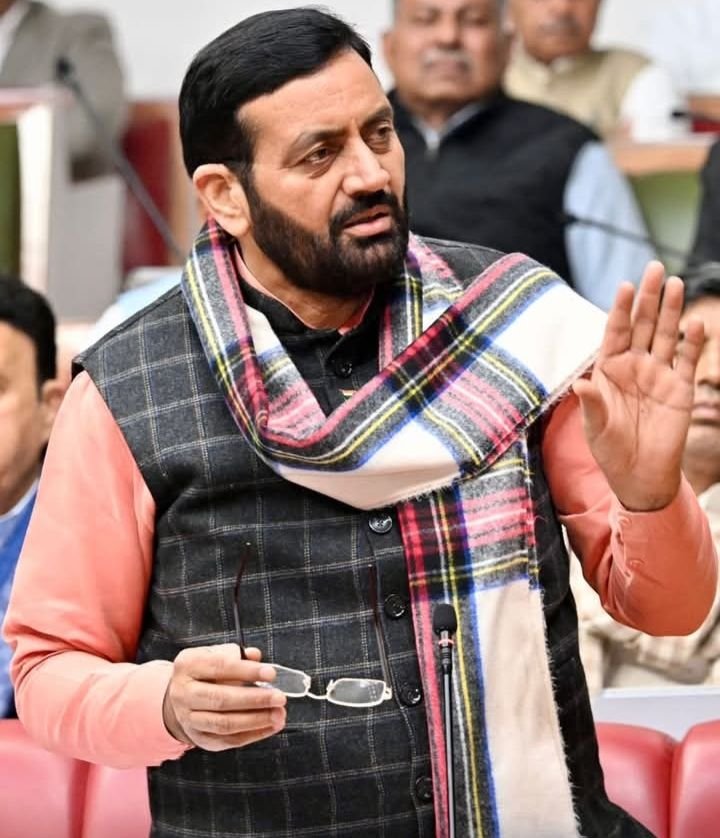
As the Haryana Vidhan Sabha convenes for its winter session, the spotlight is firmly on Chief Minister Nayab Singh Saini, whose leadership is shaping not just the government’s legislative agenda but also the tone and tenor of political discourse in the state assembly. The ongoing session has become a crucial platform for addressing pressing public issues, projecting governance initiatives, and testing the resilience of the ruling government amid opposition scrutiny.
On the very first day of the winter session, CM Saini set a noteworthy precedent by extending a formal welcome to Bhupender Singh Hooda of the Congress as the Leader of the Opposition. Traditionally, such gestures have been rare in Haryana’s political culture. By publicly acknowledging Hooda’s role, Saini signalled his intent to foster a more constructive and collaborative legislative environment, where political differences are debated robustly, yet respectfully. Hooda’s positive response underscored the potential for a mature assembly culture where public interest, rather than acrimony, guides proceedings. This gesture has been interpreted as a symbolic beginning to a more inclusive and deliberative legislative season.
Beyond ceremonial overtures, Saini has articulated a commitment to open discussion on all issues during the session. Speaking after a meeting of the Business Advisory Committee, he emphasised that the government welcomes substantive debate and is prepared to respond to questions concerning public welfare in a structured constitutional manner. He urged the opposition to raise matters of public importance through meaningful discourse, reinforcing the principle that the assembly is a forum for democratic engagement and accountability.
But the session is far from routine. One of the central narratives emerging from the house is the stark reality of the agrarian crisis in Haryana. Saini presented data that revealed more than 25 lakh farmers in the state are burdened with outstanding agricultural loans totaling over Rs 60,800 crore. This disclosure during question hour brought into sharp focus the financial distress gripping the farming community — a demographic that remains central to Haryana’s socio-economic fabric. Saini outlined existing relief measures, including cooperative bank loans at subsidised interest, interest waiver options under One Time Settlement schemes, and steps aimed at easing repayment burdens for small and marginal farmers. While these policy responses demonstrate the government’s awareness of the crisis, they also set the stage for intense legislative scrutiny and debate on the effectiveness and reach of farmer welfare programmes.
The session has also witnessed a mix of consensus and contention. In a moment of bipartisan unity, the Vidhan Sabha passed a resolution unanimously to commemorate the 350th martyrdom anniversary of Guru Tegh Bahadur, reflecting shared respect across party lines for historical and cultural legacy. Saini’s motion honoured the ninth Sikh Guru’s sacrifice and reaffirmed values of religious freedom and justice, resonating with communities across the state. Such unanimous resolutions offer a glimpse of harmony even as political debate intensifies in other areas.
Yet, political challenges are intensifying within the chamber as well. The Congress has moved a no-confidence motion against the Saini government, framing it as a platform to expose alleged misdeeds and hold the ruling dispensation accountable for its policies and governance record. The Speaker has admitted the no-confidence motion, which is set to be debated in the coming days, marking a significant test for the government’s majority and its legislative strategy. The motion also reflects the opposition’s sharper political tempo as it seeks to capitalise on contentious issues and position itself as a credible alternative ahead of future electoral battles.
CM Saini’s approach during this session reflects both administrative confidence and political calculation. By encouraging structured debate and formally inviting criticism, he seeks to demonstrate transparency and responsiveness. However, with major concerns such as the farmer debt crisis, public service delivery, and economic pressures on households, the opposition’s strategy to challenge the government keeps the session dynamic and engaged.
Outside the immediate legislative debates, Saini’s governance agenda continues to unfold. Recent administrative decisions such as the approval of Hansi as Haryana’s 23rd district are shaping the state’s development narrative. The creation of Hansi district is designed to bring governance closer to residents and improve administrative efficiency in a historically significant region. This decision reinforces Saini’s broader vision of decentralisation and local empowerment, linking legislative work with tangible administrative reforms.
Furthermore, Saini’s government has been active on multiple fronts beyond the Vidhan Sabha chamber. Initiatives to enhance transparency and ensure efficient governance — such as the rollout of digital platforms for tax reporting and revenue collection — highlight his emphasis on technology-driven administration. These measures aim to boost both public participation and accountability, placing Haryana amongst states adopting modern governance tools.
The winter session also provides a strategic opportunity for Saini to communicate priorities leading into the next phases of his term. With social and economic indicators subject to legislative oversight, his ability to navigate the assembly’s debates and counter opposition scrutiny will influence both governance perception and political capital.
In this evolving landscape, the Vidhan Sabha is not merely a venue for procedural business; it has become a stage where policy, politics, and public sentiment intersect. CM Nayab Singh Saini stands at the centre of this moment, balancing the dual demands of governance delivery and democratic engagement. His leadership in the house — from promoting respectful dialogue to confronting complex public issues — is likely to define not only the current session but also the political tenor of Haryana in the months ahead.
The winter session underscores a broader truth of democratic politics: governance is not only about legislation and implementation but about discourse, accountability and responsiveness to people’s needs. Under Saini’s stewardship, the Haryana Vidhan Sabha is navigating these currents with a blend of caution and ambition, reflective of the state’s diverse expectations and political maturity.