Home Blog Page 214

पाकिस्तान में रह रहे भारतीय नागरिक जल्द लौटें वतन, सरकार ने जारी की सख्त सलाह

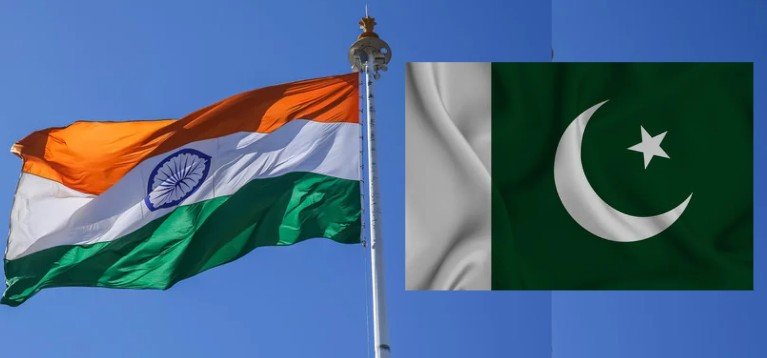
पुलवामा के बाद अब जम्मू-कश्मीर के पहलगाम में हुए भीषण आतंकी हमले ने भारत-पाकिस्तान संबंधों को एक बार फिर नाजुक मोड़ पर ला खड़ा किया है। इस हमले में 26 निर्दोष नागरिकों की जान जाने के बाद भारत ने कड़ा और निर्णायक रुख अपनाया है। इसी क्रम में गुरुवार को भारत सरकार ने पाकिस्तान के नागरिकों को जारी किए गए सभी प्रकार के वीज़ा को रद्द करने का फैसला लिया है। यह कदम न केवल सुरक्षा के लिहाज़ से बेहद महत्वपूर्ण है, बल्कि यह भारत की आतंकवाद के विरुद्ध ‘ज़ीरो टॉलरेंस’ नीति को भी उजागर करता है।

विदेश मंत्रालय द्वारा जारी बयान में कहा गया है कि पाकिस्तान में रह रहे सभी भारतीय नागरिकों को तत्काल प्रभाव से भारत लौटने की सलाह दी जाती है। मंत्रालय ने स्पष्ट किया है कि मौजूदा हालात सामान्य नहीं हैं और सीमा पार से बार-बार हो रहे आतंकी हमलों ने स्थिति को गंभीर बना दिया है। भारत में जो पाकिस्तानी नागरिक मेडिकल वीज़ा पर आए हुए हैं, उन्हें भी 29 अप्रैल तक देश छोड़ने का निर्देश दिया गया है। वहीं अन्य पाकिस्तानी नागरिकों के पास केवल 72 घंटे हैं भारत छोड़ने के लिए।

भारत सरकार के इस फैसले में सिर्फ वीज़ा रद्दीकरण ही नहीं, बल्कि 1960 में हस्ताक्षरित सिंधु जल संधि को भी तत्काल प्रभाव से निलंबित करने की घोषणा शामिल है। यह कदम तब तक प्रभावी रहेगा जब तक पाकिस्तान अपने आतंकवाद समर्थन के रवैये से सार्वजनिक और विश्वसनीय रूप से पीछे नहीं हटता। साथ ही पंजाब के अटारी में स्थित एकीकृत चेक पोस्ट (आईसीपी) को भी तत्काल बंद कर दिया गया है। हालांकि जिन यात्रियों ने वैध अनुमति के तहत भारत में प्रवेश किया है, उन्हें 1 मई तक उसी मार्ग से वापसी की अनुमति दी गई है।

भारत के इन कड़े फैसलों पर पाकिस्तान की प्रतिक्रिया भी सामने आई है। इस्लामाबाद ने दक्षिण एशियाई क्षेत्रीय सहयोग संगठन (SAARC) वीज़ा छूट योजना के अंतर्गत सभी वीज़ा निलंबित कर दिए हैं, सिर्फ सिख धार्मिक यात्रियों को छूट दी गई है। इसके अलावा, भारत के रक्षा, नौसेना और वायुसेना सलाहकारों को “अवांछनीय व्यक्ति” घोषित कर 30 अप्रैल तक देश छोड़ने का आदेश दिया गया है।

इस घटनाक्रम ने एक बार फिर यह साबित कर दिया है कि भारत अब आतंकवाद और उसकी छाया में पलने वाली कूटनीति को बिल्कुल बर्दाश्त नहीं करेगा। यह स्थिति भारत-पाकिस्तान के आम नागरिकों को भी प्रभावित करेगी, विशेषकर वे जो पारिवारिक मुलाकातों, चिकित्सा उपचार या व्यापारिक उद्देश्यों से एक-दूसरे के देश यात्रा करते हैं।

भारत का यह रुख स्पष्ट संकेत है कि राष्ट्रीय सुरक्षा सर्वोपरि है और इस मामले में किसी प्रकार की ढिलाई स्वीकार नहीं की जाएगी। आने वाले समय में इस नीति के प्रभाव क्षेत्रीय संतुलन से लेकर अंतरराष्ट्रीय मंचों तक देखने को मिल सकते हैं।

#IndiaPakistanTensions #VisaRevoked #ReturnToIndia #TerrorAttack #NationalSecurity #BreakingNews #DiplomaticCrisis #PahalgamAttack

यह एक ऑटो वेब जनरेटेड न्यूज़ वेब स्टोरी है।
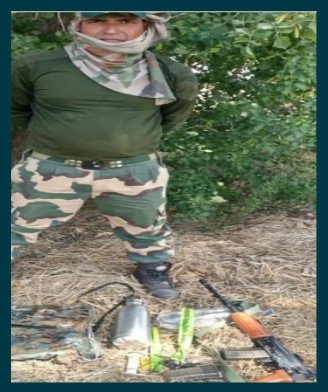
फिरोजपुर बॉर्डर से बड़ी चूक: सीमा पार कर गया BSF जवान, पाक रेंजर्स ने बनाया बंदी

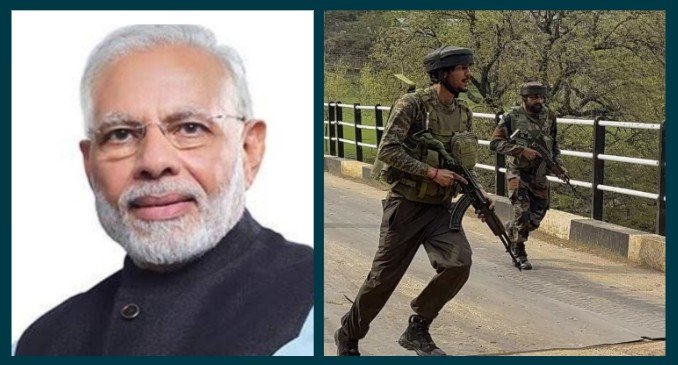
पंजाब के सीमावर्ती जिले फिरोजपुर से एक अत्यंत गंभीर और चौंकाने वाली खबर सामने आई है, जिसने सुरक्षा एजेंसियों को सतर्क कर दिया है। ममदोट सेक्टर में सीमा की रखवाली कर रहे सीमा सुरक्षा बल (BSF) के एक जवान को पाकिस्तान रेंजर्स ने बंदी बना लिया है। यह घटना उस वक्त हुई जब जवान गलती से अंतरराष्ट्रीय सीमा रेखा पार कर गया और पाकिस्तान की सीमा में प्रवेश कर गया।

सूत्रों के अनुसार, यह जवान हाल ही में श्रीनगर से ट्रांसफर होकर फिरोजपुर की ममदोट पोस्ट पर तैनात किया गया था। जानकारी के अभाव में उसे जीरो लाइन की सटीक स्थिति का पता नहीं था। इसी कारणवश वह अनजाने में सीमा रेखा पार कर गया। घटना के समय वह अपने एक साथी जवान के साथ किसानों के खेतों के पास तैनात था, जहां बीएसएफ आमतौर पर सुरक्षा के लिए मौजूद रहती है। बताया जा रहा है कि जब खेत में एक किसान कृषि कार्य कर रहा था, तो जवान वहां ड्यूटी निभा रहा था। गर्मी से राहत पाने के लिए जब वह थोड़ा आगे जाकर एक पेड़ की छांव में बैठ गया, उसी दौरान पाकिस्तानी रेंजर्स ने उसे घेर लिया।

पाकिस्तानी जवानों ने उसकी राइफल छीनी और उसे बंदी बनाकर अपने साथ पाकिस्तान ले गए। घटना की खबर मिलते ही बीएसएफ के वरिष्ठ अधिकारी हरकत में आ गए हैं और पाकिस्तान रेंजर्स से संपर्क साधने की लगातार कोशिश की जा रही है। हालांकि अब तक कोई सकारात्मक प्रतिक्रिया सामने नहीं आई है।

फिरोजपुर सेक्टर पहले से ही संवेदनशील इलाका माना जाता है, जहां किसानों की खेती की जमीनें सीमा के काफी करीब हैं। इन इलाकों में अकसर जवानों की तैनाती रहती है ताकि किसी भी घुसपैठ या अनहोनी से पहले अलर्ट जारी किया जा सके। लेकिन इस बार सीमा पर सतर्कता की बजाय एक दुखद लापरवाही सामने आई है, जिसका परिणाम एक जवान को अपनी जान जोखिम में डालकर भुगतना पड़ रहा है।

घटना न केवल सुरक्षा एजेंसियों के लिए चेतावनी है, बल्कि यह भी दर्शाती है कि नवनियुक्त जवानों को बॉर्डर के भौगोलिक व सामरिक ज्ञान की स्पष्ट ट्रेनिंग देना कितना अनिवार्य है। यह एक ऐसा मामला है जो सिर्फ मानवीय चूक नहीं, बल्कि सैन्य प्रशिक्षण और आपसी समन्वय के स्तर पर गंभीर सवाल खड़े करता है।

सरकार और बीएसएफ की ओर से इस घटना को उच्च प्राथमिकता पर लिया गया है और जवान की सुरक्षित वापसी के लिए हरसंभव प्रयास किए जा रहे हैं। अब देखना यह है कि क्या दोनों देशों की सीमाई एजेंसियों के बीच स्थापित संपर्क और आपसी सहमति से इस संवेदनशील स्थिति का शांतिपूर्ण समाधान निकलता है या फिर यह मामला राजनयिक तनाव को और बढ़ा देगा।

#BSF #Ferozepur #IndiaPakistanBorder #BorderIncident #PakRangers #NationalSecurity #BreakingNews #Punjab

This is an auto web generated news web story.

Himachal CM Meets ITBP Commander to Boost Border Security, Rural Economy, and Tourism in Frontier Districts

0

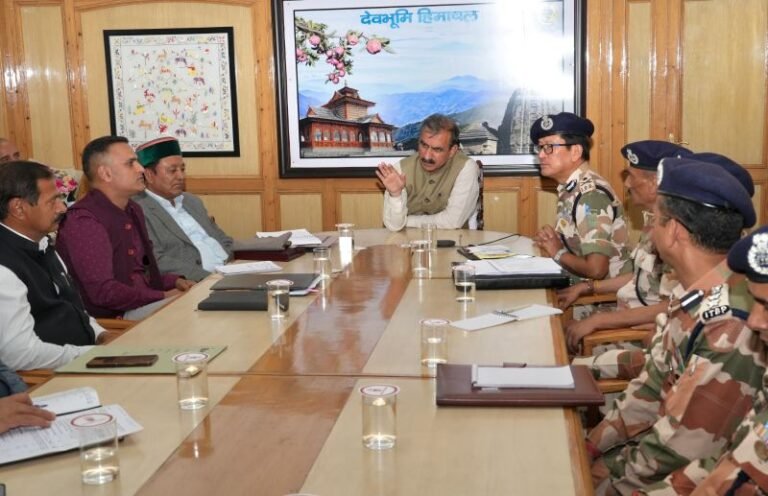
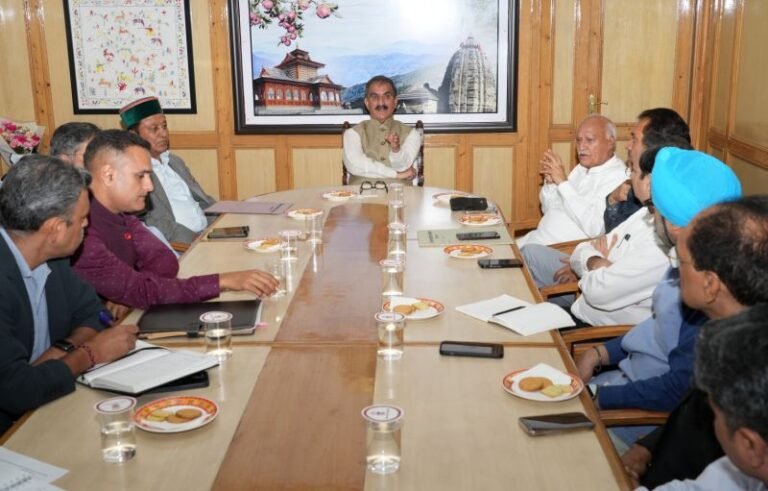
In a significant step towards enhancing border security, rural development, and frontier tourism, Himachal Pradesh Chief Minister Thakur Sukhvinder Singh Sukhu held an in-depth meeting with Sanjay Gunjyal, the Frontier Commander of the Indo-Tibetan Border Police (ITBP), Northern Frontier Headquarters, Dehradun. The interaction, held in Shimla, brought renewed focus to the strategic border districts of Kinnaur and Lahaul-Spiti, where security along the India-China border remains a critical priority.

During the meeting, a detailed roadmap was explored to not only reinforce the region’s border infrastructure and coordination but also to build a future where development and national security go hand in hand. One of the key points of discussion was ITBP’s role in these high-altitude districts, which are not just sensitive from a security standpoint, but also carry immense potential for sustainable tourism, agrarian livelihoods, and remote healthcare delivery.

Chief Minister Sukhu expressed optimism about deepening cooperation with ITBP, particularly in the domain of disaster management. He noted that ITBP’s regional response centers are vital assets, and improved coordination with state mechanisms could significantly strengthen the state’s readiness for emergencies. He proposed the integration of ITBP-controlled helipads into the tourism circuit, which would dramatically improve access to the state’s remotest yet most breathtaking locales. The Chief Minister affirmed that all necessary formalities for this plan would be pursued in consultation with the central paramilitary force, ensuring a seamless collaboration that balances strategic needs and developmental goals.

Equally notable was the Chief Minister’s push for economic inclusion of local communities through direct procurement of food products by ITBP. He emphasized that if the force begins sourcing agricultural and horticultural produce from local farmers, it would not only reduce supply chain delays but also generate much-needed employment in the rural economy. This model, he said, could become a blueprint for supporting self-reliant village economies in the frontier zones.

In addition to logistical and supply cooperation, the Chief Minister suggested involving local manpower in ITBP’s construction and infrastructure projects. He urged the ITBP to ensure that after completing due formalities, priority is given to local residents when hiring for building and maintenance works. This approach, he stated, would enhance community engagement and channelize government infrastructure investments back into the local economy.

Recognizing the urgent need to improve digital and telecommunication infrastructure in border areas, the Chief Minister issued directives to expedite all procedural requirements for setting up communication towers in these regions. Enhanced connectivity, he pointed out, is essential not only for residents and tourists but also for real-time communication during emergencies or security events.

The Chief Minister also praised ITBP’s proactive role in supporting development and civic infrastructure in the state’s remote villages. He welcomed their contributions under the Vibrant Village Programme, under which new road construction projects are being taken up. Commander Sanjay Gunjyal briefed the Chief Minister on the progress of three key roads proposed in the Sangla Valley and the Kaurik sector. In addition, he shared plans for 15 more roads to be developed in forward and isolated border areas, a move that will drastically improve mobility, connectivity, and security logistics in these often neglected parts of the state.

This high-level dialogue between the state government and the ITBP signals a new era of strategic cooperation, where national security, rural development, and eco-tourism converge. Himachal Pradesh’s vision under Chief Minister Sukhu is not just to defend its borders but to transform its frontier villages into thriving, connected, and economically resilient communities.

#HimachalPradesh #CMSSSukhu #ITBP #BorderSecurity #RuralDevelopment #VibrantVillages #LahaulSpiti #Kinnaur #IndiaChinaBorder #HimalayanTourism

This is an auto web generated news web story.

Villages Are the Soul of India: Haryana CM Bats for Self-Reliant Rural Future on Panchayati Raj Day

0

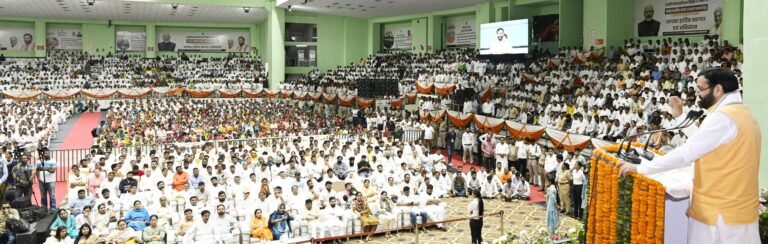
On the occasion of National Panchayati Raj Day, Haryana Chief Minister Nayab Singh Saini reaffirmed his government’s commitment to building a self-reliant and empowered rural India, declaring that the future of a developed India lies in the strength of its villages. Addressing the state-level Gram Utthan Samaroh in Panchkula, the Chief Minister emphasized that Indian villages are not only the cradle of tradition and culture but the very foundation of democratic strength and economic resilience.

Beginning the event on a somber note, the gathering observed a two-minute silence to honor the victims of the recent terror attack in Pahalgam. The ceremony, graced by several state ministers and dignitaries, was marked by a spirit of unity and shared purpose among elected panchayat representatives, many of whom were women, reflecting the government’s push for gender inclusion in grassroots governance.

Chief Minister Saini passionately articulated the significance of vibrant village communities, stating that only when panchayats are strong can democracy flourish. He reminded the audience that India’s soul resides in its villages, and for the nation to truly realize Prime Minister Narendra Modi’s vision of a developed India by 2047, the journey must begin with village-level progress. He highlighted Haryana’s deep-rooted panchayat legacy dating back to Vedic times and called upon current representatives to carry forward that rich tradition with modern commitment and purpose.

In a strong message directed at village leaders, Saini urged every panchayat to take a pledge to excel in key development areas like education, health, sanitation, and women empowerment. He called upon representatives to ensure that no child drops out of school and that every citizen has access to quality healthcare and clean living conditions. The aim, he said, should be to make each village a model of socio-economic progress.

In alignment with the Prime Minister’s broader vision for rural transformation, the Chief Minister also emphasized the need for villages to become drug-free zones. He appealed to panchayat members to take a firm stand against drug abuse and report any related activities through the government’s ‘MANAS’ portal, assuring that the identities of whistleblowers would remain confidential.

Reinforcing his earlier pledge of ensuring adequate funding for local development, Saini noted that since the July Panchayat Conference, over Rs 3,566 crore has been transferred directly into panchayat accounts. He stated that financial constraints will never hinder progress and revealed that villages with less than Rs 20 lakh in development funds have already received supplementary allocations under the ‘gap fund’ initiative, totaling Rs 583 crore last year alone.

The government’s rural development strategy, he explained, is multidimensional. From ensuring broadband connectivity and piped water supply to providing 24-hour electricity under the “Mhara Gaon-Jagmag Gaon” initiative and expanding Ayushman Bharat health benefits to every villager, Haryana’s villages are being equipped for the future. Infrastructure upgrades are also central to this mission, with 948 e-libraries, 281 indoor gyms, and 453 street-lighting projects already operational in rural areas, along with over 300 villages whose peripheries—locally known as ‘phirnis’—have been newly paved.

The Chief Minister concluded by stating that rural upliftment is not just about executing schemes but about transparent planning, inclusive participation, and creating ownership among the villagers. He encouraged all representatives to partner in the vision of “Sabka Saath, Sabka Vikas,” ensuring that every policy reflects the voice and need of the people it serves.

Haryana’s Panchayati Raj celebration thus stood not only as a ceremonial event but as a declaration of intent—one that seeks to merge tradition with progress and community with accountability to achieve a truly self-reliant and prosperous rural India.

#PanchayatiRajDay #CMNayabSinghSaini #RuralTransformation #SelfReliantIndia #VillageEmpowerment #DevelopedIndia2047 #SabkaSaathSabkaVikas

This is an auto web generated news web story.

Punjab CM Bhagwant Mann Approves Recruitment of 5,500 Jawans to Strengthen Border Security

0

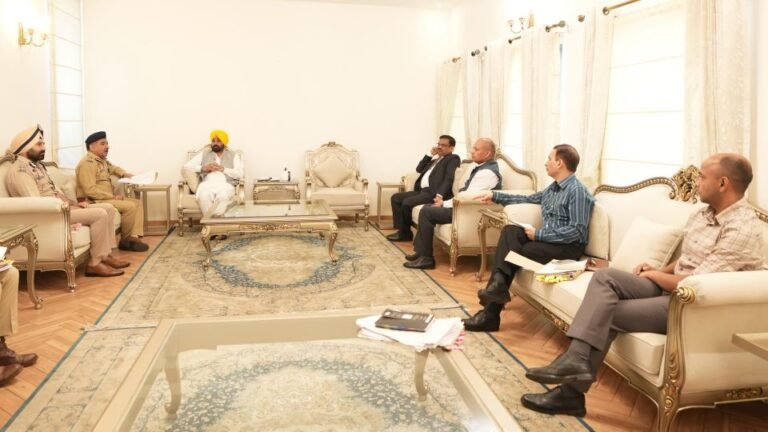
In a significant move to bolster security along Punjab’s 500-kilometer border, Chief Minister Bhagwant Singh Mann announced on Wednesday the recruitment of 5,500 jawans in the Border Wing of the Punjab Home Guards. This decision, made in a meeting at the Chief Minister’s official residence, aims to fortify the second line of defense, ensuring robust protection against external threats.

The announcement comes in the wake of the recent terrorist attack in Pahalgam, Jammu & Kashmir, which underscored the urgency of securing the state’s border areas. CM Mann emphasized that the additional 5,500 jawans will be deployed across the seven border districts, working in tandem with the Border Security Force (BSF) to create a tighter security ring around the state. This measure is designed to strengthen the perimeter and target any elements that manage to bypass the BSF’s surveillance at the international border.

Punjab’s Chief Minister highlighted that the state government is well-equipped with the necessary manpower, expertise, and determination to enhance security, but also called for the central government’s support in providing additional resources. He revealed plans to meet with the Union Home Minister to discuss further assistance, with the aim of making the border defense as impenetrable as possible.

In addition to the 5,500 jawans in the Border Wing, CM Mann also announced the recruitment of more than 400 jawans for other critical units within the state. These recruits will join forces in the Sadak Surakhya Force (SSF), the State Disaster Relief Force (SDRF), and other essential departments, further strengthening public safety and security across the state.

Mann stressed that these efforts are crucial not only for protecting the lives of Punjab’s residents but also for providing meaningful employment opportunities to the state’s youth. The recruitment drive aligns with the government’s broader commitment to both national security and the welfare of the local population.

The Chief Minister’s decision reflects a strong push for enhanced vigilance in Punjab, addressing current security concerns while investing in the state’s youth to bolster defense capabilities. This move promises to create a more secure environment while also contributing to the state’s job market, ensuring a balanced approach to public safety and employment.

#PunjabSecurity #BorderDefense #PunjabCM #PunjabJobs #HomeGuardsRecruitment #NationalSecurity

This is an auto web generated news web story.

On Panchayati Raj Day, Haryana Empowers Rural India with Rs 368 Crore Boost and Vision for Village Upliftment

0

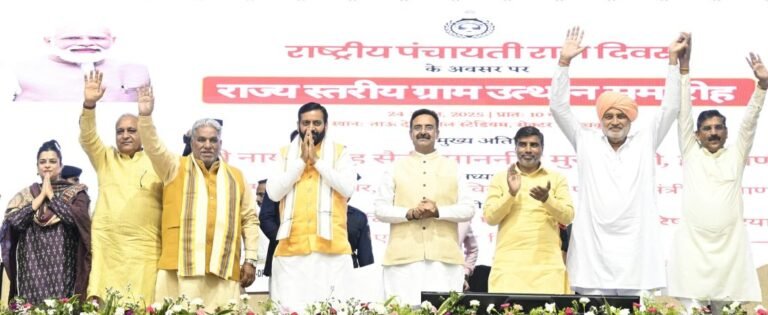
Celebrated across the country as a tribute to the foundation of grassroots democracy, National Panchayati Raj Day in Haryana this year stood out as a landmark moment for rural governance and development. At the heart of the celebration, held in Panchkula, Chief Minister Nayab Singh Saini rolled out a sweeping vision to empower panchayats, bolster rural infrastructure, and extend welfare to tens of thousands of new beneficiaries.

Marking the occasion with a robust commitment to decentralised development, the Chief Minister inaugurated 923 development works worth Rs 233 crore and laid the foundation stones for another 413 projects costing Rs 135 crore. The announcements brought the total to Rs 368 crore worth of new initiatives aimed at transforming the rural landscape of Haryana.

The day also saw the transfer of Rs 573 crore to 22 district councils, 142 panchayat samitis, and 5,388 gram panchayats as their share of stamp duty, a move lauded as a significant step toward financial empowerment of Panchayati Raj Institutions. Recognizing the role of women in rural leadership, the Chief Minister sanctioned Rs 18.28 crore for constructing women-only community centers or ‘Mahila Chaupal’ in 511 gram panchayats.

In a move applauded by the state’s elected rural leadership, the Chief Minister also released Rs 1.45 crore in honorariums to 411 Zila Parishad and 3,081 Panchayat Samiti members, acknowledging their contributions and strengthening their roles as agents of change.

The state-level Gram Utthan Samaroh (Village Upliftment Ceremony) was attended by key figures including Haryana Assembly Speaker Harvinder Kalyan, Rural Development and Panchayats Minister Krishan Lal Panwar, and other senior ministers, indicating the importance the government places on rural development.

One of the most anticipated announcements of the event was the launch of the Chief Minister’s Jagruk Gram Puraskar Yojana, a competitive rewards initiative aimed at incentivizing excellence in education, sanitation, health, women empowerment, agricultural productivity, digital connectivity, and sustainable infrastructure. Under the scheme, top-performing gram panchayats will receive cash prizes of Rs 51 lakh, Rs 31 lakh, and Rs 21 lakh based on their ranking, enabling further investments in local projects.

As part of the National Gram Swaraj Abhiyan, Chief Minister Saini also flagged off a year-long refresher training initiative targeting all of Haryana’s 71,000 elected rural representatives. These representatives will receive training kits and be taken on exposure visits to study exemplary rural development models from neighboring states. Emphasizing capacity building, the initiative is expected to elevate governance standards and align village leadership with national developmental goals.

Highlighting the cultural spirit of rural Haryana, the Chief Minister unveiled the booklet “Mera Gaon Meri Dharohar” – a compendium capturing the spiritual, historical, and cultural essence of one notable village from each of the 22 districts. These narratives aim to preserve and present Haryana’s rural heritage to the wider world, enriching the state’s identity.

Further amplifying the social security net, the Chief Minister transferred Rs 12.59 crore in pensions to 41,591 new beneficiaries under various social schemes. The initiative reflects the state’s shift to a proactive, tech-enabled model of service delivery, where eligible senior citizens and differently-abled individuals receive benefits directly in their bank accounts without the need to navigate bureaucratic hurdles.

Chief Minister Saini reiterated that governance is no longer about red tape but about results, and that the current administration is committed to ensuring dignity and opportunity for every rural citizen of Haryana. With this multifaceted push for panchayat empowerment, the state sets a compelling example of how rural governance can be both dynamic and deeply rooted in community values.

#HaryanaPanchayatiRaj #VillageUpliftment #CMNayabSinghSaini #RuralDevelopmentIndia #WomenInPanchayats

This is an auto web generated news web story.

Pakistan Suspends Simla Agreement, Expels Indian Diplomats in Escalating Row Over Pahalgam Terror Attack Response

0

In a dramatic escalation of diplomatic tensions, Pakistan has announced the suspension of the historic 1972 Simla Agreement, a move that marks a significant deterioration in India-Pakistan relations. The announcement comes amid a flurry of retaliatory actions taken by Islamabad in response to India’s strong countermeasures following the devastating terror attack in Pahalgam, Jammu and Kashmir, which claimed the lives of 26 people, mostly tourists.

The decision was confirmed by leading Pakistani daily Dawn, which reported that the National Security Committee (NSC)—Pakistan’s apex body on security affairs—convened a high-level meeting lasting over two hours to finalize the country’s response. In addition to suspending the Simla Agreement, the NSC expressed condolences for the victims of the attack but categorically rejected India’s reaction, labeling it “unilateral, unjust, politically motivated, extremely irresponsible, and devoid of legal merit.”

The Simla Agreement, signed after the 1971 Indo-Pak war, laid the foundation for bilateral dialogue and peaceful dispute resolution. It also demarcated the Line of Control (LoC) in Kashmir and emphasized mutual respect for each nation’s territorial integrity and sovereignty. Pakistan’s suspension of this agreement signals a turning point, with Islamabad choosing to roll back one of the most enduring diplomatic frameworks that has defined South Asian geopolitics for over five decades.

Pakistan’s retaliatory measures extend far beyond diplomatic symbolism. It has expelled Indian military diplomats, declared them persona non grata, and mandated that the Indian High Commission in Islamabad reduce its personnel to 30 by April 30. All SAARC visa exemptions for Indian citizens have also been revoked, a move that effectively isolates India within a regional framework once envisioned as a platform for cooperation. Additionally, the Wagah-Attari border crossing—a vital link for trade and cultural exchange—has been closed for an indefinite period.

The sharpest warning, however, came in response to India’s suspension of the Indus Waters Treaty, which Islamabad described as an “act of war.” Signed in 1960 with World Bank mediation, the treaty has endured numerous military and political crises between the two nations. Pakistan’s NSC declared any attempts by India to divert or block water flow from the Indus River system as completely unacceptable, warning of “grave consequences.”

While reiterating its commitment to peace, Pakistan has insisted that any dialogue must be grounded in what it terms “fair and lawful” terms. The NSC emphasized its position that terrorism should not be used as a pretext to alter bilateral treaties or to impose punitive diplomatic isolation.

This unfolding crisis underscores the fragile nature of India-Pakistan relations and raises serious concerns over the future of regional stability in South Asia. As both nations exchange sharp rhetoric and withdraw from foundational agreements, the global community watches with apprehension, hoping that the diplomatic backchannels remain functional to prevent a further slide into hostility.

#IndiaPakistanTensions #SimlaAgreementSuspended #IndusWaterTreaty #WagahBorderClosed #DiplomaticCrisis

This is an auto web generated news web story.

Punjab CM Bhagwant Mann Announces Major Initiatives for Drug-Free Villages and Rural Development

0

Punjab Chief Minister Bhagwant Singh Mann on Wednesday sought the active support of village Panchayats in the ongoing ‘Yudh Nasheyan Virush’ (War Against Drugs) campaign. Speaking at the state-level function to mark Panchayat Diwas, the CM announced significant financial assistance and the launch of major development projects for villages that declare themselves drug-free. Under this initiative, any village that successfully rids itself of drugs will be provided with a financial aid of Rs 1 lakh along with advanced infrastructure and facilities. These drug-free villages will be transformed into Model villages, the CM emphasized, with the state government committing to leave no stone unturned in their development.

Mann urged the Sarpanches (village heads) to take a proactive role in this noble cause. He stressed that the fight against the drug menace requires active public participation, and the Panchayats, as the backbone of rural democracy, must lead the charge. He also made it clear that the state government will not tolerate the flourishing of drug smugglers at the cost of innocent lives, highlighting the government’s efforts in disrupting drug supply chains and incarcerating key drug traffickers. For the first time, the state has also initiated the confiscation of illegally acquired properties from drug smugglers as a deterrent for others.

In another important announcement, Mann declared that Sarpanches will now receive an honorarium of Rs 2,000 per month, a promise that had been made by previous governments but never implemented. This honorarium will be given starting from the date they were elected, making it a permanent and regular feature of the Panchayat system.

Addressing the critical role of village Panchayats, Mann reiterated that these institutions are central to rural development and democracy. He emphasized that Sarpanches and Panches (village council members) are crucial in implementing government policies at the grassroots level, ensuring the delivery of pro-people and development-oriented schemes. Mann further urged the Sarpanches to work diligently in ensuring the effective supervision of development projects in their villages.

The CM also highlighted the importance of unity within villages, expressing his concern over the prevalence of groupism that often hampers development work. He urged Sarpanches to remain neutral and treat every villager equally, ensuring that village decisions benefit the community as a whole. In villages where Panchayats have worked together harmoniously, Mann praised the positive results, acknowledging those villages that have successfully elected their Sarpanches unanimously for fostering an atmosphere of unity and progress.

Mann assured the people of Punjab that the state government is fully committed to the overall development of villages. He pointed out that the state’s efforts include initiatives to rejuvenate village ponds and provide treated water for agricultural use, thus reducing the dependence on underground water. Additionally, he emphasized the state’s progress in increasing the use of canal water for irrigation, which now covers 75% of agricultural land, significantly reducing the strain on groundwater resources.

The Chief Minister concluded the event by honoring the Gram Panchayat of Baloh, District Bathinda, for securing the top position in various categories of village development, along with other Panchayats and officials for their outstanding performance.

#PunjabDevelopment #WarOnDrugs #VillageDevelopment #Panchayats #PunjabCM #RuralProgress #Sarpanches

This is an auto web generated news web story.

Pakistan Shuts Airspace and Wagah Border in Retaliation to India’s Suspension of Indus Water Treaty Over Terror Links

0

The diplomatic standoff between India and Pakistan intensified sharply this week following the deadly terror attack in Pahalgam that claimed 26 lives, including that of an Indian Navy officer. In a significant escalation, India announced the suspension of the 1960 Indus Water Treaty, a move aimed at compelling Islamabad to abandon its decades-long patronage of cross-border terrorism. In a swift retaliatory response, Pakistan blocked its airspace to Indian commercial airlines and shut down the Wagah border crossing indefinitely.

India’s decision to halt its participation in the Indus Waters Treaty—the landmark agreement brokered by the World Bank that governs the use of the Indus River system—was described by New Delhi as a “measured but firm” response to repeated acts of terrorism emanating from Pakistan. A government spokesperson stated that the suspension would remain in effect until Pakistan gives credible and irreversible proof of dismantling terror infrastructure and ceases support to militant groups operating across the Line of Control.

Describing the treaty as a legacy of peaceful cooperation even through periods of war, India’s decision marks a turning point in bilateral relations. The action sends a strong diplomatic signal, cutting into one of the most critical water sources for Pakistan, which relies heavily on the Indus River system for agriculture, drinking water, and energy generation.

Pakistan, in response, decried the Indian move, calling it a violation of international norms and branding the treaty the “lifeline for 240 million Pakistanis.” The government in Islamabad further escalated tensions by blocking its airspace for Indian airlines, severely affecting flight operations and regional air connectivity. Additionally, the closure of the Wagah border—a vital land crossing for trade and people-to-people contact—adds another layer of disruption to already strained ties.

Experts suggest that while the treaty has withstood multiple military conflicts, its suspension now reflects the changing contours of geopolitical strategy in South Asia. India’s assertive move, according to senior diplomats, is rooted in a broader doctrine of strategic deterrence—where economic, diplomatic, and infrastructural levers are being deployed alongside military readiness.

Back home, the Indian government has received support for its decision, with strategic thinkers and opposition leaders largely endorsing the tough stance. They argue that the time for symbolic protest is over and that accountability must now be tied to concrete punitive actions.

This tit-for-tat escalation comes at a time when global attention is increasingly focused on state-sponsored terrorism and its ramifications for regional peace. The United Nations and other international stakeholders have so far remained cautious, but observers believe backchannel diplomacy may already be underway to prevent further deterioration.

As the world watches the Indo-Pak equation teeter on the edge of a diplomatic crisis, India’s latest actions underscore a major policy shift—one that prioritizes national security and zero tolerance towards terrorism over historic cooperation frameworks.

#IndusWaterTreaty #IndiaPakistanTensions #PahalgamAttack #DiplomaticCrisis #AirspaceClosure #WagahBorderClosed #TerrorPolicy #SouthAsiaSecurity #CrossBorderTerrorism

This is an auto web generated news web story.

Himachal Unveils ₹2,000 Crore Agri-Push to Revive Rural Economy, Emphasizes Natural Farming and Dairy Innovation

0

In a sweeping new move aimed at revitalizing the rural economy, Himachal Pradesh Chief Minister Thakur Sukhvinder Singh Sukhu has announced an ambitious ₹2,000 crore investment plan for the agriculture and horticulture sectors in the current financial year. The announcement signals a paradigm shift in the state’s development strategy, placing sustainable farming practices and agri-infrastructure development at the heart of rural transformation.

Presiding over a high-level meeting with senior officials from agriculture, horticulture, and allied departments, CM Sukhu emphasized that his government is committed to creating a future-ready ecosystem that supports not only cultivation but also the seamless processing and marketing of agricultural and horticultural produce. This integrated approach is designed to generate long-term economic value and employment opportunities in rural areas.

A key component of the state’s vision is the dairy sector, which CM Sukhu described as a pillar of rural prosperity. Underlining the sector’s potential, he spoke of ongoing innovations including the rollout of the Him Ganga Yojana—currently being implemented on a pilot basis in Hamirpur and Kangra districts. Complementing this, the state-run Milkfed has set up 120 automated and 32 digital milk collection units in Mandi, Kullu, and Shimla districts, introducing transparency and efficiency into the milk procurement system.

What sets this initiative apart is its strong emphasis on natural farming. The Chief Minister announced that the state government has fixed Minimum Support Prices (MSPs) for key crops grown under natural farming practices—₹90 per kg for turmeric, ₹60 per kg for wheat, and ₹40 per kg for maize. This is part of a larger vision to make Himachal Pradesh a national leader in eco-friendly agriculture, where chemical-free farming is not just encouraged but economically viable.

With the aim of onboarding 1 lakh new farmers into the fold of natural farming this year, the government will link each registered grower to the Him Parivar Register, a state-level data initiative aimed at streamlining beneficiary tracking and service delivery.

These measures reflect a multi-dimensional approach to agri-development—where infrastructural investment, technological adoption, and policy support converge to empower farmers, increase incomes, and reduce environmental impact. The strategy clearly aligns with India’s larger goals of sustainable rural development, food security, and climate resilience.

As the country continues to debate the future of agriculture amid rising costs, climate risks, and market volatility, Himachal Pradesh’s model offers a proactive, inclusive, and environmentally sound template for others to emulate.

#HimachalFarmingReforms #SukhvinderSinghSukhu #NaturalFarming #DairyDevelopment #HimGangaYojana #RuralEconomy #MSPForFarmers #AgriInnovation #SustainableFarming

This is an auto web generated news web story.