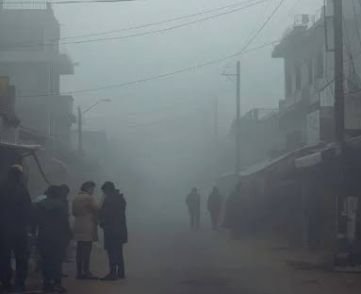
Haryana’s urban belts, especially Faridabad and Gurugram, are once again under a thick smoky shroud — with air quality plummeting dangerously in recent days. As the winter season deepens, citizens are increasingly struggling with smog, breathing difficulties, and persistent irritation in their eyes and throat. What once was a seasonal nuisance has again become a serious public health concern.
Toxic Air Returns: AQI in Hazardous Zones
The latest readings from monitoring stations show Faridabad and Gurugram among the worst-polluted urban centres in the region. In Faridabad, some sectors have recorded AQI values as high as 290 — well into the “severe” category. In Gurugram too, areas like Sector 65 and Sector 49 are seeing AQI values of 238–214, placing them in the “very poor” or “poor” zones.
These numbers reflect only a fraction of the particulate menace. Studies show that the fine PM2.5 particles — tiny enough to penetrate deep into lungs — remain consistently high throughout the year in these cities, often more than double the national safe limits.
Health Warning Bells Ringing
Medical professionals have raised serious red flags. During periods of prolonged exposure to such polluted air, even healthy individuals risk respiratory distress — and those with asthma, heart conditions or lung problems are especially vulnerable. Reports from nearby NCR areas claim spikes in allergy flare-ups, bronchitis and Chronic Obstructive Pulmonary Disease (COPD) cases among both smokers and non-smokers.
In children, the impact is even starker. Doctors warn that repeated exposure may cause long-term damage — from weakened immunity to increased risk of lung infections, and even cardiovascular problems.
Why Pollution Is Back Worse Than Before
Experts point out several reasons for the deteriorating air:
* Vehicular emissions remain high — with traffic density increasing daily.
* Construction activity and dust from roads add to particulate load.
* As temperatures drop, wind speeds slow down and vertical mixing weakens, trapping pollutants close to ground level.
* Reduction in rains and stagnant air conditions accelerate smog formation.
In fact, recent research shows that districts like Faridabad and Gurugram remain among the worst polluted in India — their PM2.5 levels often double the national safe limit, let alone the stricter guidelines suggested by global health authorities.
What Should Citizens Do: Precautions & Prevention
* Limit outdoor activity, especially early morning and evening. Use a good-quality mask (N95 or equivalent) when stepping out.
* Avoid strenuous outdoor exercise on bad-air days.
* Keep windows and doors closed during heavy smog, especially overnight.
* Use air purifiers indoors if possible, and maintain ventilation when air quality improves.
* People with asthma, heart disease, seniors and children should take extra care and consult doctors if breathing becomes difficult.
Long-Term Solutions: What Needs to be Done
The recurring surge in pollution despite regulatory efforts shows that mere short-term measures won’t suffice. Authorities must:
* Enforce stricter emissions control on vehicles and industries.
* Manage and monitor construction dust and road dust.
* Ensure real-time tracking of air quality via functional monitoring stations — a recent report revealed many Haryana Pollution Control Board (HSPCB) sensors remain offline.
* Promote cleaner energy usage, stricter vehicular standards, and public transport — reducing dependency on private vehicles.
* Launch public awareness campaigns to encourage community participation in dust- and pollution-control efforts.
This winter, the air quality in many parts of Haryana has crossed danger thresholds — a wake-up call for residents, authorities and policymakers alike. Unless long-term, integrated action is taken, the health and well-being of millions remain at risk.