Home Blog Page 225

“More Than a Makeover: Shanthi Priya’s Brave Leap Beyond Beauty Norms”

0

In a world where the film industry often celebrates a narrow, predetermined idea of beauty—long hair, flawless skin, and camera-ready grace—Southern actress Shanthi Priya has chosen to redefine that narrative entirely, and unapologetically. The actress, who once shared screen space with Akshay Kumar in his debut film Saugandh, has resurfaced into public attention not through a promotional blitz or film trailer, but through a striking personal transformation that has left audiences reflective and divided. She chose to go bald, and in doing so, she’s laid bare not just her scalp, but her convictions.

Shanthi Priya’s latest series of portraits captures more than just a look—it captures a state of mind. Dressed in a muted beige ensemble, she pairs her new appearance with smoky eyes, a touch of matte elegance, and a pair of bold gold earrings that don’t shout glamour, but rather resonate with power. Draped over her shoulders is a grey blazer—a seemingly ordinary item of clothing, until one learns it belonged to her late husband, actor Siddharth Ray, who passed away in 2004. The choice to wear it is deliberate and deeply symbolic. “Today, I carry the memory of my late husband close, in his blazer that still holds his warmth,” she wrote in a moving caption that accompanied the pictures. But this moment, heavy with sentiment, is also one of fierce liberation.

Shanthi Priya admitted that the decision to shave her head didn’t come lightly. For a woman who grew up and thrived in an industry—and a culture—that prizes luscious hair as a symbol of femininity and desirability, this act was nothing short of radical. “As women, we often set limitations in life, go by the rules and even keep ourselves caged,” she wrote. Her bald look isn’t just a style choice; it is a rebellion, a personal statement against the rigid aesthetics that have long defined on-screen femininity.

This transformation, however, was not without resistance. Social media, the ever-present judge and jury, responded with mixed emotions. While many applauded her for her courage and for challenging deep-seated norms, others questioned her choices. One comment read: “Ye kya kiya…long hair is beauty of South Indians… and you have done this?” Her response was both graceful and assertive. “Don’t have a mindset that one has to be like this and that, buddy,” she replied, dismantling centuries of cultural conditioning with a few simple words.

But beneath this bold exterior lies a more intimate struggle. In an interview with The Times of India, Shanthi Priya opened up about the internal conflict that preceded the transformation. Would this affect her career? Would directors still cast her? Would audiences accept her as she is? These are not trivial questions for a woman who has lived most of her life under the arc lights, where every image is curated and every choice scrutinized. “I asked myself, am I going to let fear dictate my choices?” she said, a question that resonates with every woman who has ever second-guessed herself before stepping outside of societal expectations.

The entertainment industry has long imposed a silent uniform on its women. Whether it’s the pressure to stay youthful, to conform to a certain body type, or to maintain a ‘marketable’ look, actresses often find themselves shackled to expectations. Shanthi Priya’s act is, in essence, a severing of those bonds—both literally and metaphorically. It’s a powerful reminder that reinvention is not only possible at any stage of life but also that it can be deeply liberating.

Her last screen appearance was in the Tamil film Bad Girl, but this latest chapter in her journey speaks volumes more than any role possibly could. In a cinematic world constantly obsessed with physical reinvention—botox, diets, image makeovers—hers is a spiritual one, shaped by loss, reflection, and resolve. Her bald head isn’t a sign of defiance; it’s a symbol of self-possession.

In an industry that often remembers women for how they looked rather than what they stood for, Shanthi Priya has flipped the script. She’s not just embracing a new look—she’s reclaiming her story. And in doing so, she’s given countless others the courage to consider writing their own, even if it means doing something as audacious as letting go of every strand they’ve ever held onto for approval.
Congress Revives Grassroots Strategy in Punjab: Bhupesh Baghel Highlights National Organisational Push Amid Rising Tensions

0

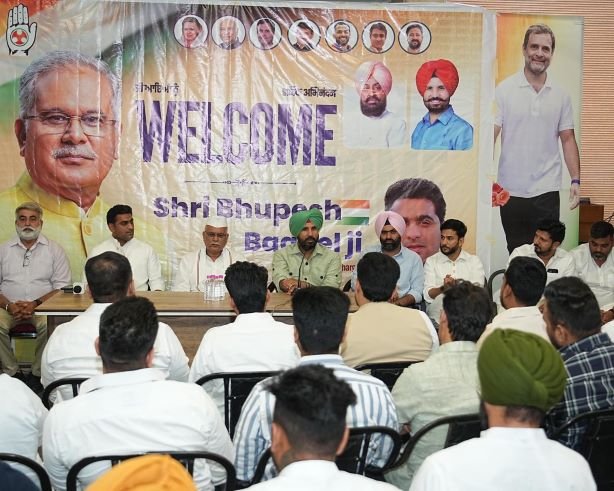
In a renewed drive to fortify the party’s presence across the country, Congress General Secretary and Punjab in-charge, Bhupesh Baghel, stated that 2025 has been earmarked as the year for organizational strengthening, with special focus on empowering the grassroots structure, especially in politically significant states like Punjab.

Baghel, currently on a two-day visit to Punjab, held crucial meetings with District Congress Committee (DCC) presidents and the Political Affairs Committee in an effort to galvanize the party machinery ahead of upcoming electoral battles. His visit aligns with Congress’ nationwide push to build a resilient framework down to the booth level.

“Empowering the district presidents is the core of our strategy,” Baghel said, emphasizing that Congress President Mallikarjun Kharge and Leader of Opposition Rahul Gandhi had recently interacted with all DCC leaders in the lead-up to the AICC Session held in Ahmedabad. The session, he noted, placed heavy emphasis on structural reform and grassroots revival, with Punjab seen as a key state in the party’s roadmap.

Eye on Ludhiana (West) By-election

The party is currently putting its weight behind the Ludhiana (West) by-election, which has become a high-priority political battleground. Punjab Congress President Amarinder Singh Raja Warring affirmed that the entire state leadership is committed to ensuring victory in the constituency.

“This bypoll is not just a local fight. It reflects the broader mood in Punjab where the public is disillusioned and fearful under AAP’s misgovernance,” Warring stated. He alleged that an atmosphere of fear and insecurity has been created in the state, citing recent incidents like grenade attacks on a temple and a BJP leader’s home, and the attempted desecration of Dr. B.R. Ambedkar’s statues.

“These events appear to be orchestrated to trigger polarization ahead of the 2027 Assembly elections,” he warned, accusing the ruling AAP government of deliberately deepening social fault lines.

Spy Allegations and Political Parallels

Responding to Punjab BJP President Sunil Jakhar’s claims that the AAP government is using intelligence services to spy on political rivals, Warring remarked, “What BJP is doing at the Centre with agencies like the ED, CBI, and Income Tax, the AAP is mimicking in Punjab using state intelligence.”

He highlighted the rising concern among political parties over the misuse of official machinery, warning that such practices erode public trust in democratic institutions.

Tahawwur Rana Extradition: National Interest Over Politics

In a separate but significant statement, Bhupesh Baghel commented on the recent extradition of 26/11 terror attack accused Tahawwur Rana to India. Clarifying the timeline of legal groundwork, he noted that most of the preparatory steps were undertaken during the UPA regime, asserting that extradition matters take time due to complex international procedures.

“Even the current NDA government took 11 years. Let’s not politicize this. National security transcends party lines. What matters is that the individual responsible for heinous acts is now in India and will face justice,” Baghel added, urging political maturity on issues of national importance.

A Critical Juncture for Punjab Politics

Baghel’s visit comes at a pivotal time for Punjab Congress, which is attempting to rebuild its political capital after being outmaneuvered by both AAP and BJP in recent elections. The party is trying to capitalize on growing dissatisfaction with the ruling AAP, which has faced criticism for governance failures, intelligence misuse, and rising security incidents.

The Congress’ sharpened focus on district-level empowerment, grassroots mobilization, and strategic leadership consolidation could mark a decisive shift in its political fortunes—particularly if it succeeds in reclaiming lost ground in Punjab through the upcoming by-elections.

As the party retools its approach for a more aggressive grassroots campaign, all eyes will remain on the effectiveness of its organizational reforms and whether these efforts can translate into electoral success.


#CongressRevival #BhupeshBaghel #PunjabPolitics #LudhianaBypoll #GrassrootsStrategy #AAPVsCongress #NationalInterest #TahawwurRana #IndianPolitics #2025PoliticalStrategy

Punjab Intensifies Drug War: Arrests Expose Cross-State Enforcement Involvement, Massive Seizures Reported

0

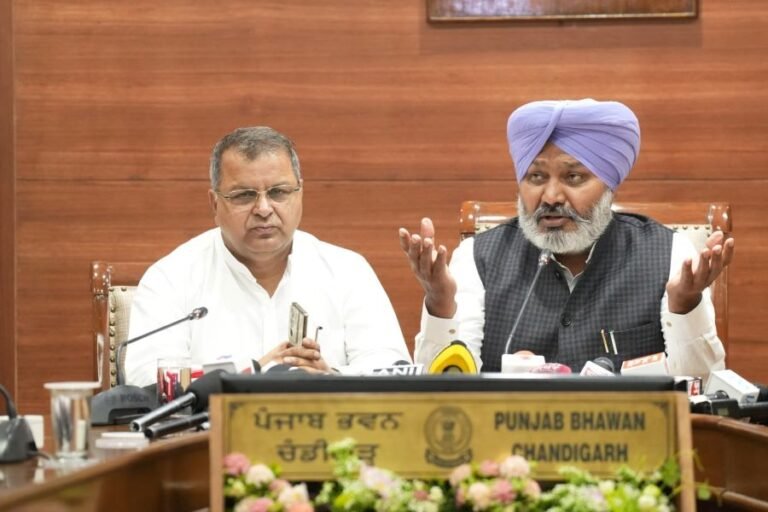
Punjab’s “Yudh Nashian Virudh” (War Against Drugs) campaign has intensified, revealing alarming connections between drug traffickers and enforcement officers from other states. Finance Minister Harpal Singh Cheema, leading the Cabinet Sub-Committee, disclosed the arrest of eight key operatives in Amritsar, including an official from Rohtak, Haryana, with 4 kg of heroin recovered. This incident has raised serious concerns about cross-state collusion in Punjab’s drug trade.  

During a press conference at Punjab Bhawan, Minister Cheema assured a thorough investigation to dismantle the entire network, irrespective of the individuals’ positions. He emphasized the Punjab government’s commitment to securing its borders, while criticizing the Union Government’s alleged shortcomings in fulfilling its border control responsibilities.

The “Yudh Nashian Virudh” campaign has yielded significant results in just 41 days:

  • 3,279 cases registered under the NDPS Act.
  • 5,537 individuals arrested.  
  • 212 kg of heroin, 6,945 kg of poppy husk, 105 kg of opium, 50 kg of ganja, 6 kg of charas, and nearly 900,000 banned tablets and capsules seized.
  • Approximately Rs 6 crore in drug money recovered.
  • Illegal properties of 57 drug smugglers demolished.

The Aam Aadmi Party’s (AAP) campaign, highlighted by a recent rally in Ludhiana led by Arvind Kejriwal and Chief Minister Bhagwant Singh Mann, has mobilized widespread community involvement. Panch-Sarpanch and municipal councilors are actively participating, reflecting a unified front against drug trafficking.  

Cheema pointed out that this Punjab budget is for the first time funding anti drone systems, and also drug census, showing its commitment to the Drug elimination effort. And nearly 980 crore rupees have been placed in the budget for sport promotion, to draw youth away from drug usage. Cheema critizised other national partys for their lack of action on the drug problem that spreads across state borders.  

The Finance Minister strongly condemned previous Akali Dal-BJP and Congress governments for their failure to address the escalating drug crisis. He contrasted their inaction with the AAP government’s proactive approach, emphasizing that the “Yudh Nashian Virudh” campaign demonstrates a firm resolve to eradicate the drug menace.

This renewed offensive underlines the Punjab government’s determination to tackle the deeply entrenched drug trade, uncovering cross-state complicity and delivering severe consequences to those involved.

Hashtags:

#PunjabDrugs #YudhNashianVirudh #PunjabPolice #DrugSeizure #PunjabNews

Himachal MLA Kewal Singh Pathania to Represent India at International Powerlifting Championship in Norway

0

Dharamsala (Arvind Sharma), April 10, 2025

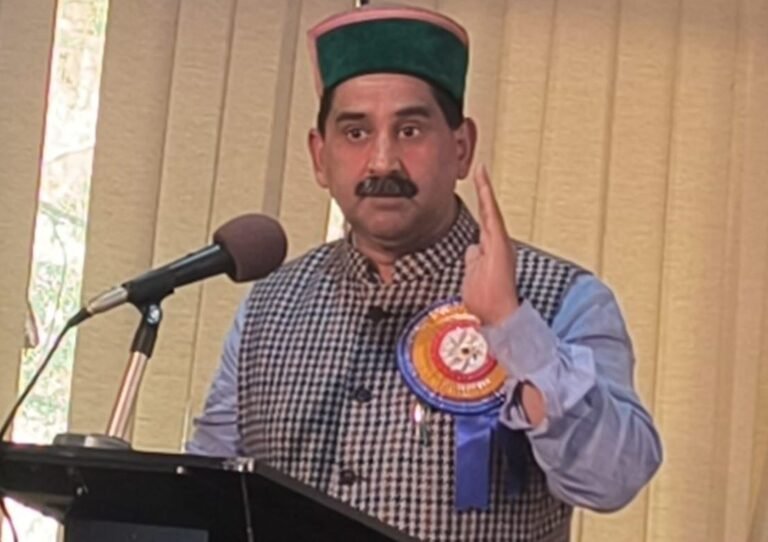
Kewal Singh Pathania, MLA from Shahpur constituency in Himachal Pradesh and a prominent figure in Indian powerlifting, has been selected to represent the Indian Powerlifting Team at the prestigious World Classic and Equipped Bench Press Championship. The event is scheduled to take place in Drammen, Norway, from May 17 to 24, 2025.

Pathania holds multiple key roles in the sport, serving as Vice President of Powerlifting India, President of the Himachal Pradesh Powerlifting Association, and as a certified national referee. His selection is a testament to his dedication to the sport and long-standing contributions at both the national and international levels.

He has previously served as the team manager for India in major international competitions held in the USA, Canada, Dubai, England, and Russia. His vast experience is expected to be a valuable asset for the Indian team in Norway.

The announcement has sparked widespread celebration across Himachal Pradesh, particularly in the Shahpur constituency. Youth and sports enthusiasts have expressed excitement and pride, seeing Pathania’s achievement as a source of inspiration and a positive push toward greater participation in sports across the region.

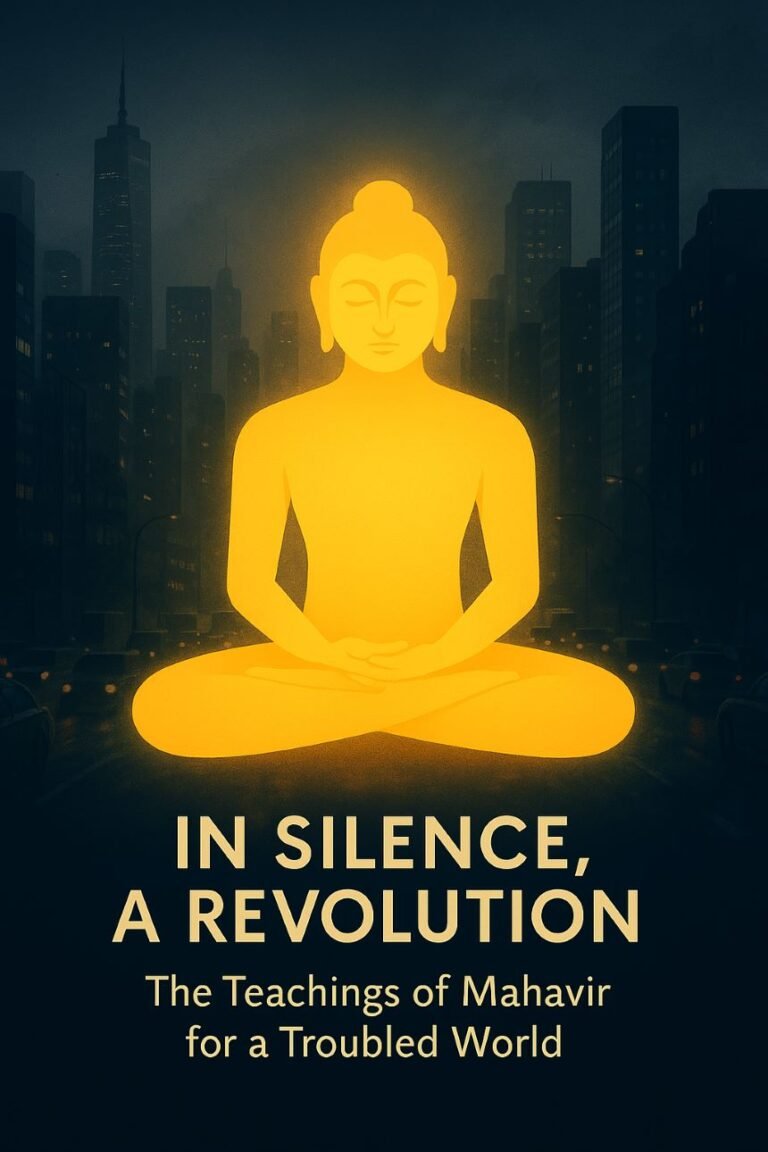
The Eternal Light of Mahavir in a World Darkened by Materialism

 Saptrishi Soni:

In an age defined by noise, speed, and insatiable hunger for material gain, the ancient teachings of Lord Mahavir echo with renewed urgency. As the world rushes toward unchecked consumerism and moral indifference, his message—rooted in compassion, restraint, and spiritual awareness—stands as a timeless call for ethical recalibration. Though centuries have passed since his footsteps graced the earth, the need for a moral and spiritual renaissance rooted in his philosophy has never been more profound.

Today, human lives are increasingly seen through the lens of profit, identity politics, and transactional worth. Compassion has become an endangered virtue, and ethics are often considered negotiable. In this atmosphere of rising intolerance, environmental destruction, and social polarization, the relevance of Mahavir’s teachings becomes sharply pronounced. His vision was not confined to the boundaries of religion or sect; it was a vision for all beings—for a world governed by peace, understanding, and inner balance.

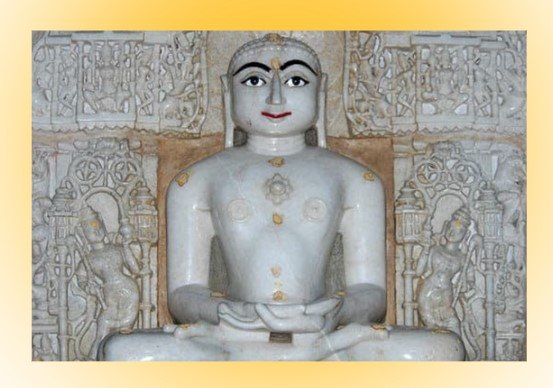
Lord Mahavir’s life was a living manifestation of his principles. Born into royalty, he abandoned privilege and wealth in search of spiritual truth. His path was not one of conquest but of inner conquest—an embodiment of self-discipline, nonviolence, and harmony. These ideals are not antiquated relics but urgently needed antidotes to our modern maladies. In a time when people are more likely to chase status updates than self-awareness, when success is measured in possessions and not inner peace, his renunciation is not a rejection of life but a radical affirmation of its deeper meaning.

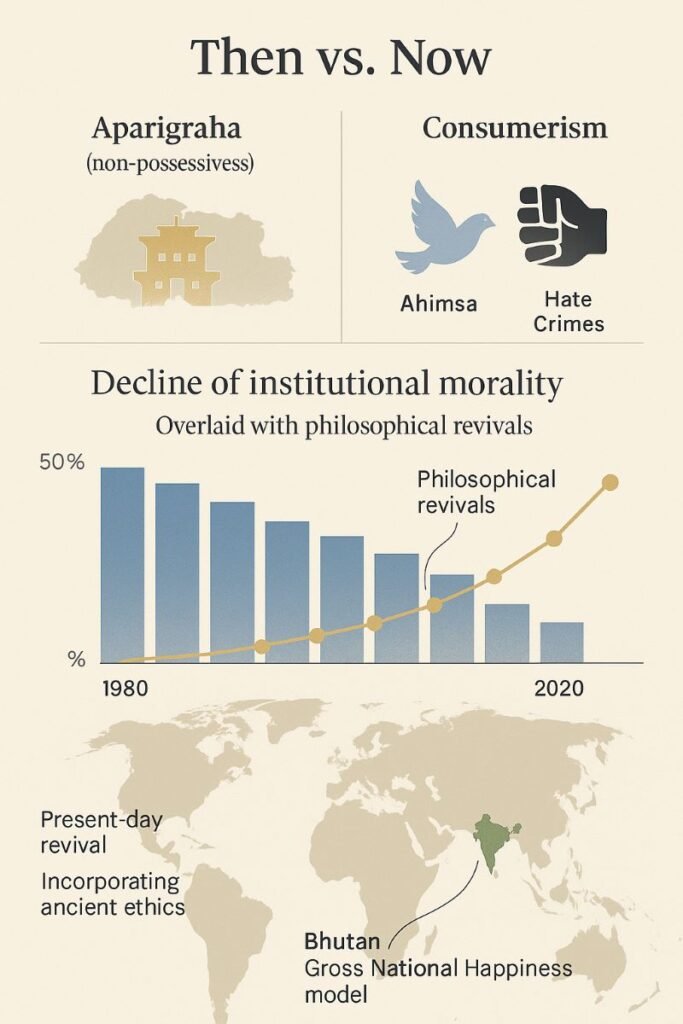
Mahavir’s doctrine of ahimsa—nonviolence—is perhaps the most revolutionary philosophy in the context of today’s fractured world. We are surrounded by increasing physical, emotional, and digital aggression. Religious conflicts, political extremism, gender-based violence, and acts of terrorism speak volumes about humanity’s retreat from compassion. Yet, Mahavir reminds us that true strength lies not in retaliation but in restraint. Nonviolence, in his vision, is not merely the absence of physical harm; it is the presence of empathy in thought, word, and deed. In a world that thrives on outrage and division, his message is a plea to return to dialogue, understanding, and mutual respect.

One of the most powerful critiques Mahavir offers to modern civilization is his concept of aparigraha, or non-attachment. In a society addicted to accumulation—more wealth, more gadgets, more validation—this principle offers a revolutionary simplicity. Our endless cravings have not only exhausted the planet but have hollowed the soul. The pursuit of excess has led to environmental degradation, increasing inequality, and a mental health crisis marked by anxiety, burnout, and depression. Mahavir’s teaching of living within one’s needs is not about ascetic withdrawal, but about responsible consumption and conscious living—an antidote to a world on the brink of ecological collapse.

Today’s youth, often caught between tradition and modernity, find themselves alienated from the values that once sustained communities. In the race toward success, instant gratification and individualism have replaced patience, humility, and collective growth. Old-age traditions and inherited moral values are often dismissed as outdated, irrelevant. Yet Mahavir’s emphasis on satya (truth), asteya (non-stealing), and brahmacharya (self-discipline) provides a necessary framework for ethical existence in a world losing its moral compass. These principles offer more than personal virtue—they provide a roadmap for social justice, sustainability, and spiritual liberation.

The disregard for truth and the normalization of deceit—especially in public discourse, media, and business—reveal a society increasingly comfortable with moral shortcuts. Truth has become a casualty in the race for dominance, wealth, and power. Mahavir’s insistence on truthfulness is not about idealism but integrity. In a world of misinformation, manipulations, and half-truths, his teachings call for an honest engagement with life, with others, and with ourselves.

His idea of brahmacharya, often misunderstood merely as celibacy, in its true sense is about mastering desires, regulating impulses, and fostering inner clarity. In an age of hyper-stimulation, digital distraction, and indulgence, this call for self-mastery is not puritanical—it is liberating. It frees us from being enslaved by whims, and reconnects us with purpose and peace. It is a spiritual technology for modern life, where the greatest revolution lies in turning inward.

Mahavir’s teachings extend beyond human society into the realm of all sentient beings. His emphasis on jiv daya—compassion for all life—resonates with the most urgent calls of our time: animal rights, environmental preservation, and climate responsibility. As forests fall to machines and oceans fill with plastic, as countless species face extinction, Mahavir’s wisdom becomes a voice not just of ecological awareness but of planetary kinship. His vision compels us to reimagine development not as domination, but as coexistence.

What makes Mahavir’s teachings especially vital is their universality. They are not bound by geography, language, or belief. They speak to the core of human existence: the longing for peace, the search for meaning, the pursuit of justice. In a world that often mistakes religion for ritual, and spirituality for showmanship, Mahavir invites us to turn inward, to cultivate personal ethics, and to seek liberation not through dogma but through disciplined compassion.

His message is not a relic of the past but a prophecy for the future. It is a warning that without inner transformation, outer progress will be hollow. It is a blueprint for a civilization that can be both advanced and awake, both powerful and peaceful.

As we face a world increasingly defined by divisions—religious, economic, racial, environmental—Lord Mahavir’s teachings emerge not just as an ethical compass, but as a spiritual lifeline. In embracing his vision, we are not returning to the past; we are choosing a wiser, more humane future.

आज के दौर में भगवान महावीर के विचारों की प्रासंगिकता  

एक नैतिक और आध्यात्मिक पुनर्जागरण की पुकार

आज के भौतिकवादी और असहिष्णु समय में भगवान महावीर के विचार पहले से कहीं अधिक प्रासंगिक हैं। उन्होंने अहिंसा, सत्य, अपरिग्रह, अस्तेय और ब्रह्मचर्य जैसे सिद्धांतों के माध्यम से आत्म-शुद्धि और सामाजिक सद्भाव का मार्ग दिखाया। उनके विचार उपभोक्तावाद, हिंसा, पर्यावरण विनाश और नैतिक पतन जैसी समकालीन समस्याओं का समाधान प्रस्तुत करते हैं। महावीर का दर्शन केवल एक धार्मिक मत नहीं, बल्कि एक सार्वभौमिक जीवनशैली है जो हर मानव को करुणा, संयम और आत्मानुशासन की राह पर चलने को प्रेरित करता है। ऐसे में आज की दुनिया को उनके सिद्धांतों की सख्त ज़रूरत है।


– डॉ सत्यवान सौरभ

आज का युग तकनीकी उन्नति, वैज्ञानिक प्रगति और भौतिक समृद्धि का प्रतीक बन चुका है। लेकिन इस विकास के शोरगुल में कहीं मनुष्य का नैतिक और आत्मिक पक्ष दबता जा रहा है। मनुष्य ने चाँद पर बस्तियाँ बसाने की तैयारी कर ली है, परंतु पृथ्वी पर जीवन की गरिमा और करुणा को बनाए रखना दिन-ब-दिन चुनौतीपूर्ण होता जा रहा है। ऐसे समय में भगवान महावीर के विचार न केवल मार्गदर्शक सिद्धांत हैं, बल्कि एक चेतावनी भी हैं – कि अगर हमने आत्मनियंत्रण, अहिंसा और सहअस्तित्व की राह नहीं अपनाई, तो यह प्रगति भी विनाश का कारण बन सकती है।

महावीर का जीवन: त्याग और तपस्या की मिसाल

भगवान महावीर का जीवन ही उनके सिद्धांतों का जीवंत उदाहरण है। एक राजकुमार होकर भी उन्होंने भौतिक सुखों का त्याग कर सत्य की खोज में तपस्या का मार्ग चुना। उन्होंने आत्मा की शुद्धता, सत्य की अनुभूति और मोक्ष प्राप्ति के लिए कठोर साधना की। उनका जीवन इस बात का प्रमाण है कि आत्मिक शांति बाहरी भौतिकताओं में नहीं, बल्कि आत्मानुशासन और करुणा में निहित है।

अहिंसा: आज की सबसे बड़ी ज़रूरत

महावीर स्वामी का सबसे महत्वपूर्ण संदेश था — अहिंसा परमो धर्मः। आज, जब समाज धार्मिक असहिष्णुता, जातीय हिंसा, लैंगिक अपराध, युद्धों और आतंकवाद की चपेट में है, तब यह संदेश एक प्रकाश स्तंभ की भाँति मार्गदर्शन करता है। अहिंसा केवल शारीरिक हिंसा का विरोध नहीं, बल्कि विचारों, शब्दों और व्यवहार में भी करुणा का समावेश है।

आज सोशल मीडिया के माध्यम से फैलती नफरत, ट्रोलिंग, और वैचारिक कट्टरता के दौर में यदि हम महावीर की अहिंसा को अपनाएं, तो समाज में सहिष्णुता, संवाद और समझदारी को बढ़ावा मिल सकता है।

अपरिग्रह: उपभोक्तावाद के विरुद्ध एक चेतावनी

महावीर ने अपरिग्रह यानी संग्रह की प्रवृत्ति से दूर रहने का उपदेश दिया। आज का उपभोक्तावादी समाज “और चाहिए” की मानसिकता में जकड़ा है — अधिक धन, अधिक संपत्ति, अधिक उपभोग। लेकिन इसी लालसा ने पर्यावरण को प्रदूषित किया, सामाजिक असमानता बढ़ाई, और मानसिक तनाव को जन्म दिया।

अपरिग्रह का अर्थ है — आवश्यकताओं तक सीमित रहना, अनावश्यक संग्रह से बचना, और जीवन को सरल बनाना। यदि हम इस सिद्धांत को अपनाएं, तो न केवल पर्यावरण की रक्षा संभव है, बल्कि जीवन की गुणवत्ता में भी सुधार होगा।

सत्य और अस्तेय: नैतिक मूल्यों का क्षरण रोकने का उपाय

आज राजनीति से लेकर कॉर्पोरेट जगत तक, झूठ और छल की नीति एक आम चलन बन गई है। तथाकथित “स्मार्टनेस” का मतलब अब चालाकी और नैतिकता से समझौता करना हो गया है। लेकिन महावीर का सिद्धांत था — सत्य बोलो और चोरी न करो।

आज जब फेक न्यूज, धोखाधड़ी, और अनैतिक व्यवहार समाज का हिस्सा बन चुके हैं, तब सत्य और अस्तेय का पालन ही हमें नैतिक रूप से पुनः ऊँचाई पर ले जा सकता है। यह व्यक्तिगत आचरण से लेकर राष्ट्रीय चरित्र तक का निर्माण करता है।

ब्रह्मचर्य: आत्मसंयम और मानसिक शुद्धि का मार्ग

ब्रह्मचर्य को आज सिर्फ एक धार्मिक सिद्धांत मानकर छोड़ दिया गया है, जबकि महावीर के अनुसार यह आत्म-नियंत्रण और मानसिक शुद्धता का साधन है। आज की पीढ़ी इंटरनेट, मनोरंजन और तात्कालिक सुखों के आभासी संसार में आत्मविस्मृति की ओर बढ़ रही है।

ब्रह्मचर्य का आशय यहां केवल यौन संयम से नहीं है, बल्कि समग्र इंद्रिय-नियंत्रण से है। जब मनुष्य अपने इच्छाओं पर नियंत्रण करना सीख जाता है, तभी वह सच्चे अर्थों में स्वतंत्र होता है।

समवेदना और जीवदया: पर्यावरण और प्राणी मात्र के लिए सहअस्तित्व

महावीर का संदेश केवल मनुष्यों तक सीमित नहीं था। उन्होंने समस्त प्राणियों के प्रति करुणा और दया की बात कही। आज जब हम जंगलों को काट कर विकास की सीढ़ियाँ चढ़ रहे हैं, जानवरों के आवास छीन रहे हैं, और पर्यावरण को विनाश की ओर ले जा रहे हैं — तब यह संदेश हमारी चेतना को झकझोरता है।

जीवदया न केवल अहिंसा की भावना है, बल्कि यह पर्यावरणीय संतुलन और पारिस्थितिकी की रक्षा का आधार भी है। महावीर के सिद्धांतों को अपनाना, एक हरित, टिकाऊ और सह-अस्तित्व पर आधारित दुनिया के निर्माण की ओर कदम है।

मानवाधिकार, न्याय और सामाजिक समानता

आज जब दुनिया जाति, लिंग, धर्म, और आर्थिक असमानता की खाई में उलझी है, तब महावीर का यह विश्वास कि हर जीव आत्मा है और हर आत्मा समान है — सामाजिक न्याय का सशक्त आधार बन सकता है। जैन दर्शन में किसी को नीच या उच्च नहीं माना जाता; सबको मोक्ष का अधिकार है। यही भावना आज के सामाजिक आंदोलनों और मानवाधिकार की मांगों की आत्मा हो सकती है।

आध्यात्मिकता बनाम धर्म का दिखावा

आज धार्मिकता का मतलब पूजा-पाठ, कर्मकांड और बाहरी प्रदर्शन रह गया है, जबकि महावीर की शिक्षाएं आंतरिक शुद्धि और आत्मा की मुक्ति की ओर इंगित करती हैं। धर्म को यदि आडंबरों से निकालकर आत्मा की यात्रा के रूप में देखा जाए, तो यह समाज में पाखंड को खत्म करने का उपाय बन सकता है।

भगवान महावीर के विचार किसी कालखंड तक सीमित नहीं हैं। वे सार्वकालिक हैं — हर युग, हर समाज, हर मनुष्य के लिए। आज का दौर, जिसमें मानसिक तनाव, सामाजिक हिंसा, और नैतिक पतन चरम पर है, वहाँ महावीर की शिक्षाएं एक समाधान के रूप में सामने आती हैं।

हमें यह समझना होगा कि महावीर का दर्शन केवल जैन धर्म के अनुयायियों के लिए नहीं, बल्कि समस्त मानवता के लिए है। उनकी शिक्षाओं को अपनाकर हम एक अधिक सहिष्णु, करुणामय, न्यायसंगत और संतुलित समाज की नींव रख सकते हैं।

Global Terrorism Under Watch: Tahawwur Rana’s Extradition Sends a Strong Message

0

Saptrishi Soni:

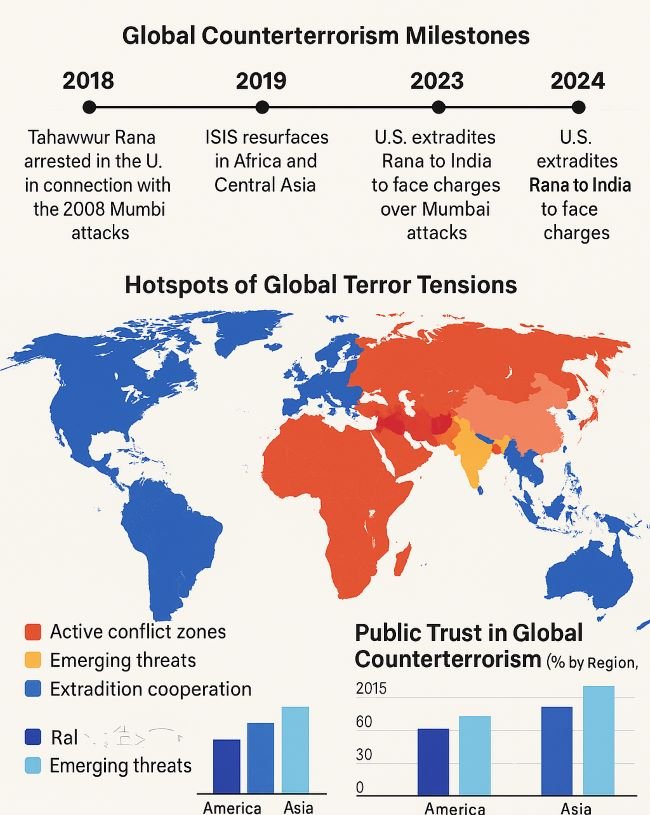
In a pivotal moment for international counterterrorism efforts, the United States has extradited Tahawwur Rana to India—an accused conspirator in the devastating 2008 Mumbai attacks that claimed 166 lives. As the world grapples with escalating terror threats from multiple fronts—ranging from South Asia to the Middle East—Rana’s extradition underscores a growing global consensus: there is no safe haven for terrorism.

Who Is Tahawwur Rana?

Born in Chichawatni, Pakistan, in 1961, Rana served as a military doctor in the Pakistan Army before immigrating to Canada in the late 1990s. By 2001, he was a naturalized Canadian citizen, later moving to the United States where he launched a chain of immigration service offices.

But Rana’s story took a dark turn. He maintained close ties with David Headley, the man who scouted locations for the 26/11 Mumbai attacks. According to Indian investigative authorities and U.S. court records, Rana helped Headley set up a business front in Mumbai that facilitated reconnaissance missions for the attack. He was also linked to a foiled terror plot against the Danish newspaper Jyllands-Posten for publishing cartoons of the Prophet Muhammad.

Arrested in the U.S. in 2009, Rana faced legal battles for years before exhausting all appeals against extradition. His arrival in India, now imminent, is not just the culmination of a legal process but a statement of international cooperation against terrorism.


A Global Climate of Fear

Rana’s extradition comes amid a volatile global landscape, where terrorism is no longer a regional issue—it is a transnational threat. The attacks in Moscow’s Crocus City Hall, the resurgence of ISIS factions, the Houthi disruptions in the Red Sea, and the war in Gaza have all signaled one stark truth: the global counterterrorism framework must evolve, and swiftly.

The United States’ decision to hand over Rana is symbolic. It communicates a no-tolerance policy towards individuals accused of terrorism, regardless of where they reside or how long they’ve evaded prosecution. It’s also a strategic gesture, particularly in the wake of America’s increasing involvement in trying to resolve the Israel-Gaza conflict and curbing Iran-backed proxy activities.


Why Rana’s Extradition Matters for India—and the World

For India, bringing Rana to justice is more than a legal win—it’s a matter of national closure. The 2008 Mumbai attacks were India’s 9/11, not just in scale, but in emotional trauma. The event shook the world’s faith in urban security and exposed deep vulnerabilities in international intelligence cooperation. Rana’s trial in India could open new leads, expose sleeper cells, and offer a detailed account of the plot’s funding and execution.

For the global community, the case sets a precedent. It affirms that bureaucratic red tape will not be a shield for the accused when terrorism is involved. It also reinforces that democracies are willing to collaborate on matters of justice—especially when innocent lives are at stake.


The U.S. Role and the Bigger Picture

President Joe Biden has made counterterrorism and Middle East stabilization cornerstones of his foreign policy agenda. The White House’s firm message to Iran—to cease backing the Houthis and other proxy militias—goes hand-in-hand with moves like Rana’s extradition. The optics are clear: the U.S. is actively participating in dismantling the infrastructure of global terror.

As America pushes for a ceasefire in Gaza and urges restraint from Tehran, the Rana case also provides diplomatic leverage. It showcases the U.S. not just as a power broker, but as a justice enforcer—willing to take tough calls when international norms are threatened.


A Call for United Global Action

Rana’s extradition should be a rallying cry for world leaders to reinforce cross-border intelligence sharing, plug legal loopholes, and crack down on digital financing of terrorism. As terror tactics evolve—through lone-wolf attacks, cyber radicalization, and proxy warfare—the global response must be equally nimble and united.

Delhi Court Under Tight Security as Mumbai Attacks Accused Tahawwur Rana Faces Extradition

0

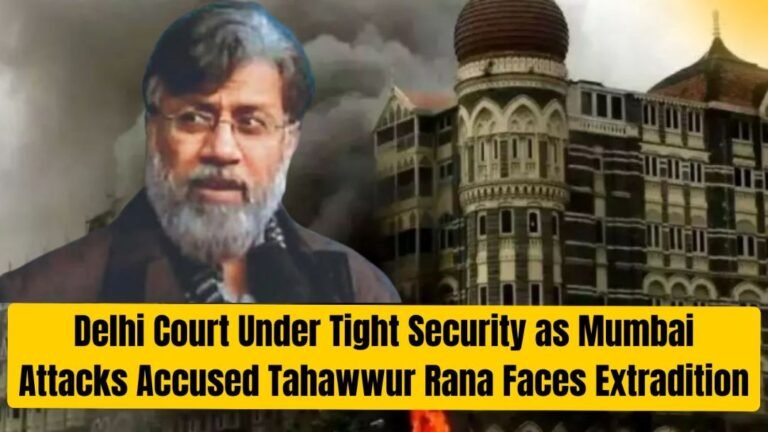
Security has been significantly heightened at Delhi’s Patiala House Court, anticipating the production of Tahawwur Rana, a key accused in the 2008 Mumbai terror attacks, following his extradition from the United States. The 64-year-old Pakistan-born Canadian national, known to be a close associate of David Coleman Headley (Daood Gilani), a US citizen and pivotal figure in the terror conspiracy, is expected to be presented before the court on Thursday.   

Rana’s extradition to India comes after his final attempt to block the process was dismissed by the US Supreme Court. In response, law enforcement agencies have implemented stringent security measures at Patiala House Court. Paramilitary forces and Delhi Police personnel have been deployed to ensure thorough physical checks and frisking of all visitors, aiming to prevent any security breaches.   

Officials at Tihar Jail have confirmed that preparations are complete to house Rana in a high-security ward, awaiting court orders for his formal custody. Rana, a central figure in the investigation into the devastating 26/11 Mumbai attacks, is being transferred to Delhi from the US, and Tihar Jail is expected to be his place of detention upon arrival.   

Keywords: Tahawwur Rana, Mumbai terror attacks, 26/11 Mumbai attacks, Patiala House Court, extradition, David Coleman Headley, Tihar Jail, Delhi Police, security, terrorism, India, United States, court proceedings, high-security.

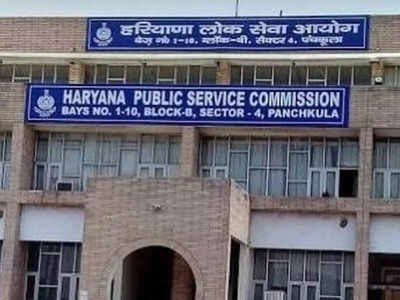
HPSC की PGT लेक्चरर भर्ती में ऑर्थो कोटे का फर्जीवाड़ा: क्या अब आयोग को मेडिकल बोर्ड गठित करना चाहिए?

ऋषि प्रकाश कौशिक, गुरुग्राम।

हरियाणा लोक सेवा आयोग (HPSC) द्वारा आयोजित PGT (Post Graduate Teacher) लेक्चरर भर्ती में विकलांगता कोटे, विशेष रूप से ऑर्थोपेडिक (Ortho) श्रेणी के तहत फर्जीवाड़े के आरोप सामने आ रहे हैं। कई चयनित अभ्यर्थियों ने 80% या उससे अधिक विकलांगता का दावा किया, जबकि जांच या प्रत्यक्ष अवलोकन में वे सामान्य रूप से शारीरिक गतिविधियों में सक्षम पाए गए।

यह मामला तब और गंभीर हो गया जब कुछ अभ्यर्थियों द्वारा कथित रूप से फर्जी मेडिकल प्रमाणपत्र प्रस्तुत किए जाने की सूचना सोशल मीडिया और RTI के माध्यम से सामने आई। इससे पहले भी हरियाणा में फर्जी दिव्यांगता प्रमाणपत्र के ज़रिए सरकारी नौकरियों और योजनाओं का अनुचित लाभ उठाने के मामले सामने आ चुके हैं।

क्यों ज़रूरी है मेडिकल बोर्ड?

PGT लेक्चरर जैसी प्रतिष्ठित भर्तियों में, जहाँ उच्च शैक्षणिक गुणवत्ता की अपेक्षा होती है, वहाँ फर्जीवाड़ा न केवल न्यायसंगत चयन प्रक्रिया पर सवाल खड़ा करता है, बल्कि वास्तव में दिव्यांग अभ्यर्थियों के अधिकारों का हनन भी करता है।

इसलिए ज़रूरी है कि HPSC एक स्वतंत्र “मेडिकल बोर्ड” का गठन करे, जो—

सभी विकलांगता दावों की स्वतः जांच करे,

जांच रिपोर्ट को अंतिम प्रमाण के रूप में स्वीकार करे,

और यदि कोई गड़बड़ी पाए, तो सीधे अयोग्य घोषित कर सके।

हरियाणा में PGT जैसी शिक्षकीय भर्तियों में पारदर्शिता बनाए रखने के लिए HPSC को मेडिकल जांच के लिए अपनी प्रणाली विकसित करनी चाहिए। एक मजबूत, निष्पक्ष मेडिकल बोर्ड का गठन न केवल फर्जीवाड़े को रोकेगा, बल्कि आयोग की साख को भी बरकरार रखेगा।


these are the individual views of the writer ,

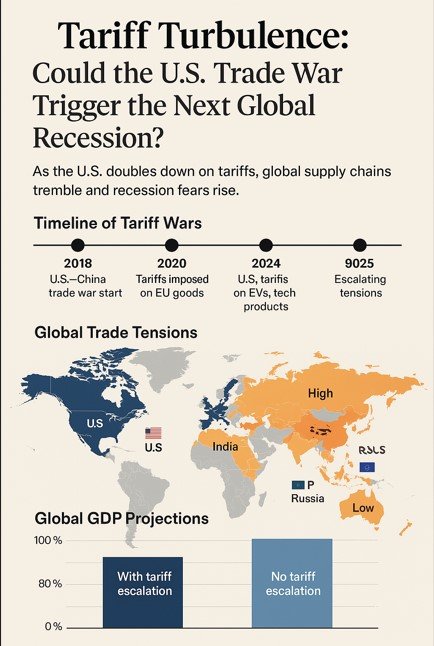
Tariff Turbulence: How the U.S. Trade War Could Trigger the Next Global Recession

Saptrishi Soni:

Imagine waking up to find that everything—from your morning coffee to your smartphone—has suddenly become more expensive. This isn’t a dystopian future, but the reality looming over the global economy, as tariff wars intensify once again, with the United States leading a new wave of aggressive trade actions that threaten to destabilize international markets.

From Washington to Beijing, Brussels to New Delhi, governments are bracing for economic tremors stemming from tariff hikes and retaliatory taxes. The Biden administration, despite advocating multilateralism, has carried forward key protectionist measures from the Trump era—and in some cases, escalated them under the banner of national security and fair trade.

But what does this mean for the rest of the world? And could this escalating trade tension tip the fragile post-pandemic recovery into another full-blown recession?


Tariffs: Economic Tool or Political Weapon?

Tariffs—import taxes levied by governments—were historically designed to protect domestic industries, generate revenue, and manage trade deficits. But in recent years, they have transformed into powerful geopolitical tools. The U.S.–China trade war (2018–2020) was a prime example, when both nations imposed hundreds of billions in retaliatory tariffs.

Today, that fire hasn’t died—it’s been rekindled. As the U.S. targets foreign goods and countries strike back, the global trade order risks being fractured anew.

Recent moves:

  • U.S. tariffs on Chinese tech goods remain in place and are now being expanded to include EV batteries and solar components.
  • Proposed taxes on digital services in Europe and India have drawn retaliatory threats from the U.S.
  • Tensions over carbon tariffs, especially from the EU, are also escalating with American exporters fearing future penalties.

The Domino Effect on Global Supply Chains

Tariff hikes don’t occur in isolation. They send shockwaves through global supply chains. Multinational companies face rising production costs, delays, and a scramble to diversify sourcing.

Consider this:

  • U.S. tariffs on semiconductors and rare earths sourced from Asia have made manufacturing costlier, affecting sectors like automotive, consumer electronics, and defense.
  • China has responded by restricting exports of graphite and gallium—key minerals for tech hardware.
  • Major firms are now reshuffling operations from China to Vietnam, Mexico, and India to minimize exposure.

While such shifts may seem like opportunities for emerging markets, they come with short-term disruptions, higher prices, and uncertainty.


India, the EU, and Other Fronts in the Trade Dispute

India, for instance, has been on both sides of tariff battles with the U.S.—particularly over agricultural exports, pharmaceuticals, and digital taxes. Washington has raised concerns over India’s tariffs on American goods like almonds and apples, while New Delhi has criticized U.S. visa restrictions and export duties on steel and aluminum.

The European Union, too, finds itself in a tight spot. The long-running Boeing-Airbus subsidies dispute and the imposition of U.S. tariffs on European wine, cheese, and aircraft parts caused significant economic strain. With growing differences over carbon border taxes and the digital economy, the U.S.-EU trade relationship remains vulnerable.


WTO: A Watchdog with Blunt Teeth?

As trade tensions escalate, the role of the World Trade Organization (WTO) is under scrutiny. Designed to mediate disputes and uphold free trade, the WTO’s influence has waned due to the refusal of the U.S. to support its appellate body, effectively paralyzing its dispute resolution mechanism.

With global giants bypassing the WTO and opting for bilateral retaliation, the rules-based trading system risks further erosion. This weakening of international trade governance could encourage more countries to act unilaterally, exacerbating tensions.


The Real Threat: Global Recession 2.0?

The biggest risk of ongoing tariff wars isn’t just higher prices—it’s the prospect of another global recession. Here’s how:

  • Consumer Spending Falls: As imported goods become expensive, purchasing power drops, slowing consumption.
  • Investor Uncertainty: Volatile trade policies deter investment and long-term planning.
  • Stifled Innovation: Industries reliant on cross-border tech collaboration face barriers, impacting innovation cycles.
  • Agricultural Pain: Countries dependent on exports (like Brazil, India, and the U.S. Midwest) face lower demand and price drops.

Global financial institutions, including the IMF and World Bank, have already cautioned that prolonged tariff escalations could shave off nearly 1% of global GDP growth annually—a staggering figure in a post-pandemic recovery phase.


A Way Forward: From Protectionism to Pragmatism

Despite rising protectionist rhetoric, there is still room for global course correction. A few encouraging trends include:

  • The push for new trade pacts like the Indo-Pacific Economic Framework (IPEF) and EU-India FTA negotiations.
  • Revival of regional economic alliances like RCEP and CPTPP to build alternative trade routes.
  • A renewed global focus on sustainable trade—including tariff relaxations on green technologies and environmentally friendly products.

But these alone won’t suffice. For long-term stability, the world must return to multilateral dialogue, restore trust in institutions like the WTO, and balance domestic economic needs with global cooperation.


The Tariff Trap We Must Avoid

What began as a strategy to protect jobs and reduce trade deficits now threatens to derail global economic recovery. The U.S. may be leading the charge, but no nation is immune from the fallout of trade conflict.

As tariff walls rise, so do the barriers to progress, equity, and cooperation. If left unchecked, this tariff war could become the spark that lights the next global downturn.

The world stands at a crossroads: regress into economic isolation or rebuild a future founded on mutual growth. The choice—and the cost—is ours.